
Bestsellers
- -10%
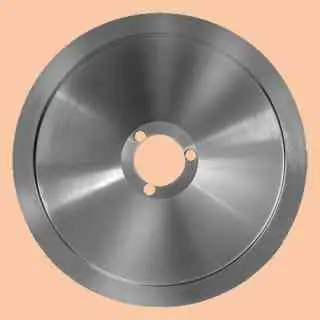
blade for slicer 250 diameter 25cm three hole central hole 40mm c45 rgv fac e
"
BLADE FOR SLICER 250 DIAMETER 25CM THREE HOLE CENTRAL HOLE 40MM C45 RGV FAC E
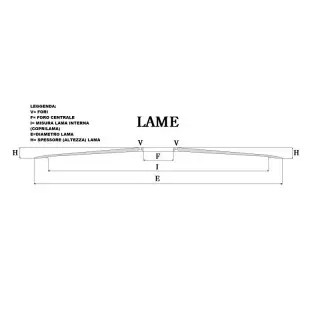
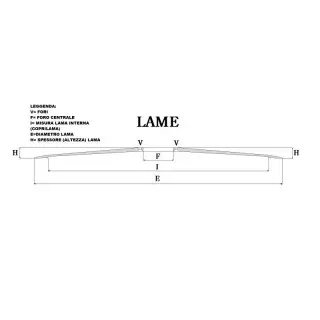
| (E) Diameter Blade | 250 | |
| (V) Number of holes | 3 | |
| (F) Dim. Central hole | 40 | |
| (H) Blade height (thickness) | 17.5 | |
| (I) Inner blade measurement (blade guard) | 210 |
VISIT THE BLOG FOR MORE INFORMATION
"
- -10%
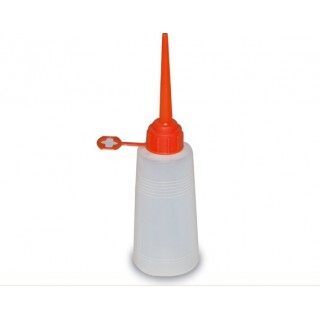
neutral white oil pack for slicers 50 ml
Food-grade neutral white oil, 50 ml, for lubricating gravity-feed and flywheel slicers of any brand: colourless, odourless and tasteless, it protects the carriage, food pusher and blade from friction and rust. Do not use cooking oils.
- -10%
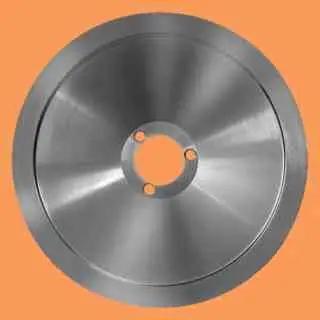
blade for slicer 220 diameter 22cm three hole central hole 40mm c45 rgv and other brands
BLADE FOR SLICER? 220/40/3/180 / 15,5 C45 FOR ABO - KOLOSSAL - OMAS -VAN DALL
(E) Diameter Blade 220
(V) Hole Number 3
(F) Dim. Central Hole 40
(H) Blade height (thickness) 15.5
(I) Internal blade size (cap) 180
VISIT THE BLOG FOR MORE INFORMATION
hand protection slicer fac and swedlinghaus model 195 220 250r 250e
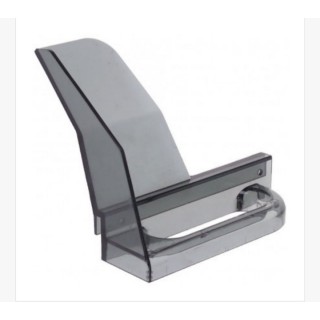
Carriage hand guard for FAC and Swedlinghaus gravity-feed slicers, models 195 / 220 / 250R / 250E, CE and CE domestic versions. Safety shield between the hand and the blade during slicing: mandatory component, to be replaced if broken or missing. Hole centre distance 14.9 cm (measurement to check for compatibility). Specific to FAC/Swedlinghaus, not interchangeable with RGV models.

Subcategories
-
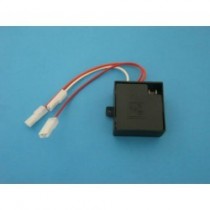 <p>The slicer's electronic board manages motor start and stop and, on more recent models, integrates the protections required by safety regulations.</p> <p><strong>Main types</strong>: <strong>CEV</strong> board with thermal protection (cuts power in case of motor overheating); <strong>safety</strong> board complete with box and button panel, often required for regulatory compliance; <strong>universal</strong> board for slicer/meat grinder/grater without a dedicated button panel, suitable for motors up to 3 HP.</p> <p><strong>Compatibility by brand</strong>: models available for Sirman (single-phase 220V and three-phase 220-380V versions, connectable to small or large button panels), Berkel (e.g. mod. AV35, 230/400V), Fia Boston (single-phase 220V), Omas (e.g. mod. C8243, 230-380V or 400V) and RGV. Between different brands the board often has a different shape and connections, even at the same voltage.</p> <p><strong>Available voltages</strong>: single-phase 220-230V and three-phase 380-400V — always check the one shown on the motor's nameplate or on the board you're replacing before ordering.</p> <p>Go back to <a href="/en/electronic-boards.html">Electronic Boards</a> for other machine types, or see the <a href="/en/pulsantiere-per-affettatrici-e-tritacarni.html">Button Panels</a> some boards connect to.</p> <p><strong>Frequently asked questions</strong></p> <p><strong>How do I choose the right board for my slicer?</strong><br>Check the machine's brand and model, the voltage (single or three-phase) and whether the original board connects to a dedicated button panel or is the universal type.</p> <p><strong>Can I fit a universal board instead of the original one with a button panel?</strong><br>Only if the existing button panel is compatible with the universal board's input; otherwise you need the version complete with box and button panel.</p> <p><strong>What is thermal protection on the CEV board?</strong><br>It cuts power to the motor in case of overheating, preventing damage from prolonged use or overload.</p>
 -
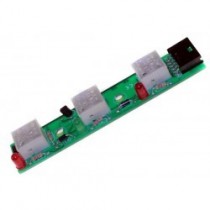 <p>The meat grinder's electronic board controls motor start and stop and, on many models, motor reversal: a crucial function when the auger jams on bones or tough meat, since it lets you free it by reversing the direction of rotation without disassembling the machine.</p> <p><strong>Main types</strong>: board <strong>with motor reversal</strong> (e.g. mod. TGM3, mod. IB, up to 3HP); <strong>safety</strong> board complete with box and button panel with three-phase plug; <strong>dual speed</strong> board (mod. 2VA, 2VA+TP) to adjust processing speed; dedicated versions for <strong>bone saws</strong> (e.g. Siprem/Fabbri mod. 300-380).</p> <p><strong>Compatibility by brand</strong>: models for Sirman, Omas, RGV and the Siprem family (TG/ITR codes), often identifiable from the code printed on the original board.</p> <p><strong>Available voltages</strong>: single-phase 220-230V and three-phase 380-400V, for motors up to 3HP depending on the model — always check the motor's nameplate before ordering.</p> <p>Go back to <a href="/en/electronic-boards.html">Electronic Boards</a> for other machine types, or see <a href="/en/gears-for-meat-grinder.html">Gears for Meat Grinders</a>.</p> <p><strong>Frequently asked questions</strong></p> <p><strong>What is motor reversal on a meat grinder for?</strong><br>It lets you reverse the motor's direction to free the auger when it jams on bones or tough meat, without having to disassemble the grinding assembly.</p> <p><strong>What's the difference between a simple and a dual-speed board?</strong><br>Dual speed lets you adjust the processing rate (e.g. finer grinding at reduced speed); the simple version only has start/stop (and possibly reversal).</p> <p><strong>Is the bone saw board the same as the meat grinder one?</strong><br>No, they're dedicated to different machines: always check the specific model before ordering.</p>
 -
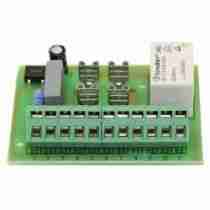 <p>The cheese grater's electronic board controls motor start and stop and, on models with an <strong>electric brake</strong>, quickly stops the grating roller when switched off — an important safety function on a machine that works with an exposed or partially guarded roller.</p> <p><strong>Main types</strong>: <strong>self-braking</strong> board (e.g. mod. HP2), board <strong>with electric brake and restart</strong> (e.g. mod. FR-5, TGFR9, up to 3HP); <strong>safety</strong> board complete with box and button panel; <strong>universal</strong> board also compatible with potato peelers (e.g. mod. TGCETSP, for motors up to 3HP).</p> <p><strong>Compatibility by brand</strong>: models for Fama (e.g. paired with mod. 8/F2027, with digital button panel), Marwel and CEG (e.g. low-voltage board mod. RC2).</p> <p><strong>Available voltages</strong>: single-phase 220V and three-phase 380V, for motors up to 3HP depending on the model — always check the motor's nameplate before ordering.</p> <p>Go back to <a href="/en/electronic-boards.html">Electronic Boards</a> for other machine types, or see <a href="/en/grating-spare-parts.html">Cheese Grater Spare Parts</a>.</p> <p><strong>Frequently asked questions</strong></p> <p><strong>What is the electric brake on a cheese grater for?</strong><br>It stops the grating roller much faster than natural coasting, reducing the risk of contact with the moving part.</p> <p><strong>Does the universal board also work on potato peelers?</strong><br>Some universal models (e.g. TGCETSP) are compatible with both graters and potato peelers, within the stated motor power limit (e.g. up to 3HP).</p> <p><strong>How do I know if my board has the electric brake?</strong><br>It's shown in the model/code printed on the original board (e.g. codes containing FR) or in the machine's manual; if unsure, compare the switch-off behaviour (immediate stop vs. natural coasting).</p>
There are 154 products.
- -30%
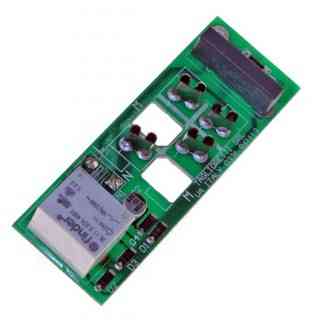
card mod. tg03se fac / rgv
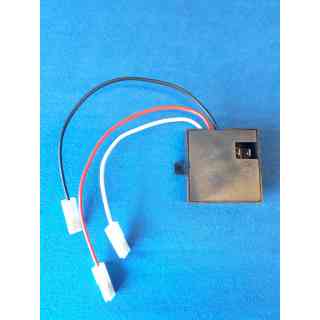
Electronic control board mod. TG03SE (CEV type, low voltage) for FAC, RGV and Berkel A250 slicers. It manages switch-on, start/stop buttons and anti-restart safety: without a working board the machine will not start. Check the TG03SE code and voltage/connectors before purchasing; installation by a technician.
AVAILABLE IN 12 DAYS
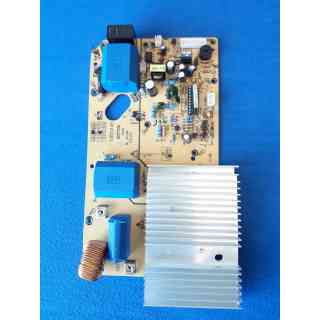
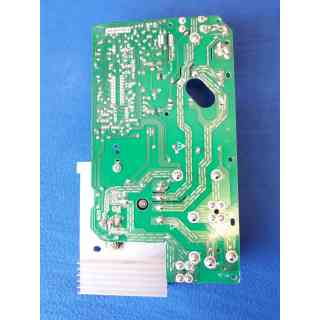
induction plate pi2000 rgv
Board for the RGV PI2000 induction plate. Manages induction, power, display and safety. Code 100163. Check model and code on the original board.
- -30%
electronic board replacement models slicer rgv rgv
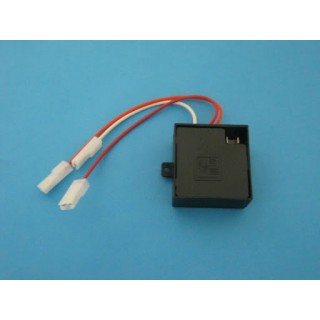
ELECTRONIC BOARD REPLACEMENT MODELS SLICER RGV RGV S.L. CEV
electrical system box
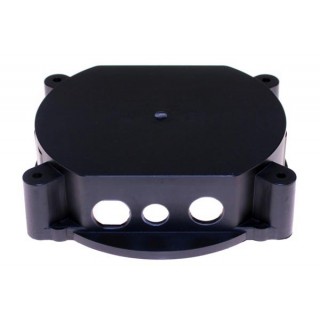
Electrical-system box: protective enclosure housing the board, connections and electrical components of the machine. Code AGWSELE0907. Check dimensions and fittings against the original.
- -30%
single-phase board for slicer mod. tg 02se
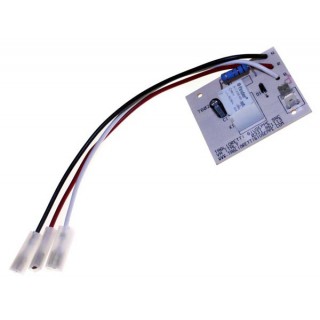
Single-phase 230V control board mod. TG 02SE for Beckers and other slicer brands. Manages motor start, stop and anti-restart safety: without a working board the machine will not start. Check the TG 02SE code, single-phase supply and connectors before purchasing; installation by a technician.
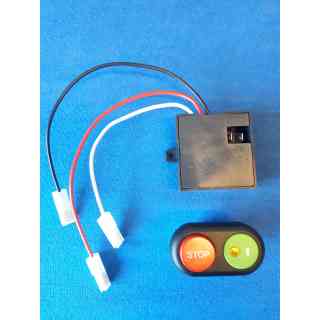
- -30%
rgv card all models with 6-contact switch
RGV BOARD ALL MODELS WITH 6 CONTACTS SWITCH
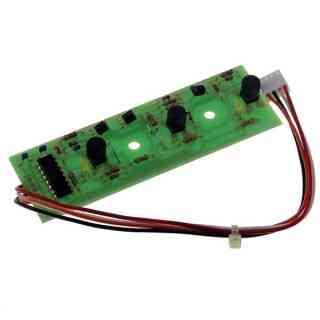
- -30%
control board 230/50 rno all
230V/50 Hz control board, RNO ALL version. Controls start/stop and motor. Code AGWSELE1097. Check voltage and model on the original board.
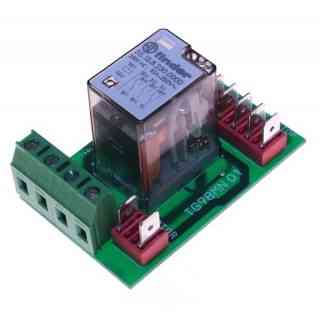
- -30%
t98mn electronic board for manconi ib300 0611866160
T98MN board for the Manconi IB300 slicer (ref. 0611866160). Controls start/stop and motor. Code AGWSELE1638. Check model and reference on the original board.
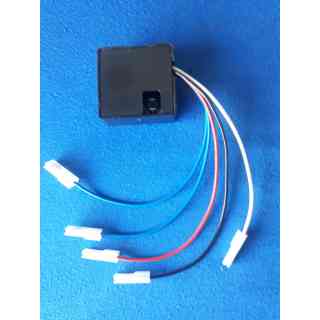
- -30%
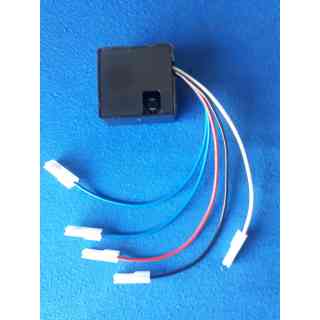
cev card for rgv slicers with thermal protection
CEV BOARD FOR RGV SLICERS WITH THERMAL PROTECTION, BLUE WIRES, BLACK PLASTIC BOX
agwsele3391
- -30%
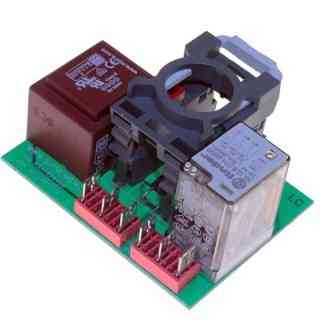
single phase electronic board model mab-ev
Single-phase electronic board, model MAB-EV. Controls start/stop and motor. Code AGWSELE2351. Check voltage and model on the original board.
- -30%
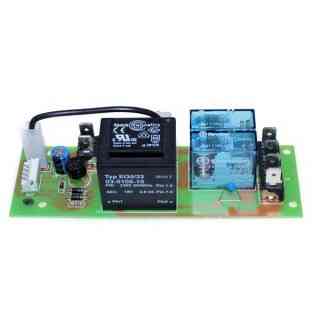
electronic board for sirman single-phase slicer 220v connectable to small or large black triangular push-button panel
ELECTRONIC CONTROL BOARD FOR SIRMAN SLICER, SINGLE-PHASE 220V, COMPATIBLE WITH SMALL OR LARGE BLACK TRIANGULAR RUBBERIZED BUTTON PANEL. No longer available, replaced by AGWSELE0534 three-phase board, which can be connected as single-phase. For technical information contact 3392021881.
- -30%
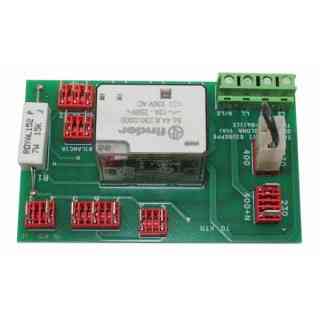
card 230 / 380v ktr blockbuster small box
230/380V board, model KTR, small box, for Kolossal slicers (Manconi). Controls start/stop and motor. Code AGWSELE1945. Check voltage, box and model.