
Bestsellers
- -10%
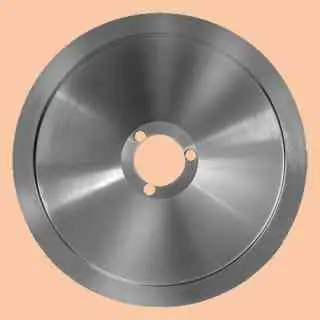
blade for slicer 250 diameter 25cm three hole central hole 40mm c45 rgv fac e
"
BLADE FOR SLICER 250 DIAMETER 25CM THREE HOLE CENTRAL HOLE 40MM C45 RGV FAC E
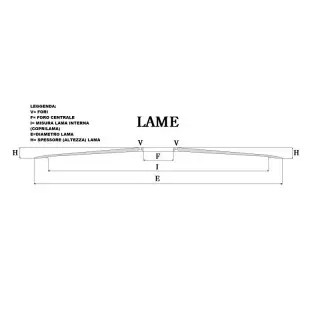
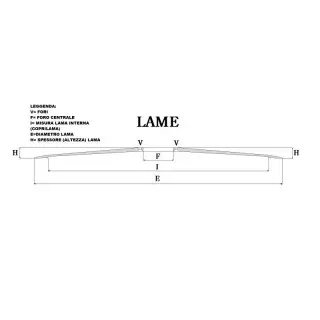
| (E) Diameter Blade | 250 | |
| (V) Number of holes | 3 | |
| (F) Dim. Central hole | 40 | |
| (H) Blade height (thickness) | 17.5 | |
| (I) Inner blade measurement (blade guard) | 210 |
VISIT THE BLOG FOR MORE INFORMATION
"
- -10%
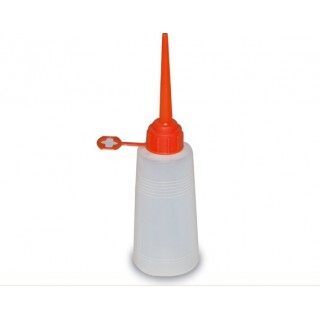
neutral white oil pack for slicers 50 ml
Food-grade neutral white oil, 50 ml, for lubricating gravity-feed and flywheel slicers of any brand: colourless, odourless and tasteless, it protects the carriage, food pusher and blade from friction and rust. Do not use cooking oils.
- -10%
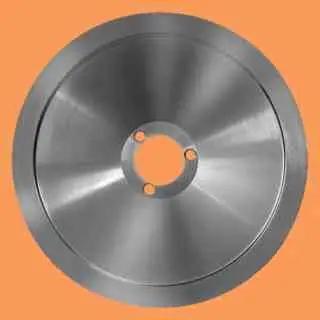
blade for slicer 220 diameter 22cm three hole central hole 40mm c45 rgv and other brands
BLADE FOR SLICER? 220/40/3/180 / 15,5 C45 FOR ABO - KOLOSSAL - OMAS -VAN DALL
(E) Diameter Blade 220
(V) Hole Number 3
(F) Dim. Central Hole 40
(H) Blade height (thickness) 15.5
(I) Internal blade size (cap) 180
VISIT THE BLOG FOR MORE INFORMATION
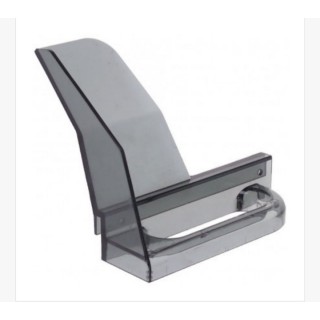
hand protection slicer fac and swedlinghaus model 195 220 250r 250e
Carriage hand guard for FAC and Swedlinghaus gravity-feed slicers, models 195 / 220 / 250R / 250E, CE and CE domestic versions. Safety shield between the hand and the blade during slicing: mandatory component, to be replaced if broken or missing. Hole centre distance 14.9 cm (measurement to check for compatibility). Specific to FAC/Swedlinghaus, not interchangeable with RGV models.

Subcategories
-
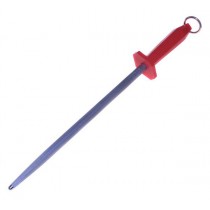 <p>The honing steel is the tool for daily touch-up of a knife's edge: it doesn't sharpen (it removes no metal), but straightens the microscopic bending of the edge caused by use, keeping it sharp for longer between one proper sharpening and the next.</p> <p><strong>Round or oval</strong>: the round section is the most common and versatile, the oval one offers a slightly different contact surface. <strong>Length</strong>: from 20 to 30cm, to be chosen based on the length of the blades you normally use. Brands in range: Dick, Simplex.</p> <p>For the knife range see <a href="/en/butchery-and-deli-cutlery.html">Cutlery</a>, in particular the <a href="/en/slicing-knives.html">Slicing Knives</a>.</p> <p><strong>Frequently asked questions</strong></p> <p><strong>How often should the honing steel be used?</strong><br>Ideally before every session of intensive cutting, to keep the edge performing well between one proper sharpening and the next.</p> <p><strong>Does the honing steel replace sharpening?</strong><br>No: it only restores the alignment of the existing edge, it doesn't regenerate it. When the edge can no longer be straightened with the honing steel, a proper sharpening is needed.</p>
 -
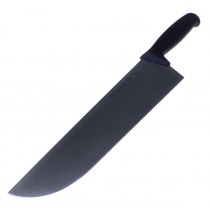 <p>Professional kitchen knives for hand-slicing meat, roasts, bread and cured meats — a complement to the mechanical blades of slicers, for cuts that require manual precision.</p> <p><strong>Types</strong>: <strong>slicing knife</strong> (long, thin blade, 20 to 34cm, for even slices), <strong>roast knife</strong> (23cm, stiffer blade for cooked meats), <strong>curved knife</strong> (15cm, curved blade for trimming), <strong>filleting knife</strong> (18cm, flexible for separating meat from bone or skin) and specific knives <strong>for bread</strong> and <strong>for cured meats</strong> (blades from 230 to 320mm).</p> <p><strong>How to choose the length</strong>: longer blades (28-34cm) are suited to large cuts (roasts, whole hams) with a single continuous cut; shorter blades for precision cuts or small pieces.</p> <p>For other cutlery items go back to <a href="/en/butchery-and-deli-cutlery.html">Cutlery</a>.</p> <p><strong>Frequently asked questions</strong></p> <p><strong>What's the difference between a slicing knife and a filleting knife?</strong><br>The slicing knife has a stiff, long blade for uniform slices; the filleting knife is more flexible, designed to follow the profile of bones or skin.</p> <p><strong>What length should I choose to slice a large roast?</strong><br>A long blade (28-34cm) lets you complete the cut in a single motion, without "sawing" the piece.</p>
 -
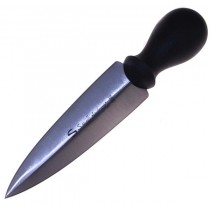 <p>Cheese-specific knives, where blade choice varies a lot depending on the hardness of the wheel being cut.</p> <p><strong>Reggiano knife</strong> (9cm): short, sturdy almond-shaped blade, designed for breaking and cutting pieces from hard, aged wheels such as Parmigiano and Grana. <strong>Milano knife</strong> (14cm): longer blade for semi-aged or softer cheeses. <strong>Cheese-cutting wire</strong> (5m): for soft, fresh cheeses, which a blade would tend to crush rather than cut cleanly.</p> <p>For the full cutlery range see <a href="/en/butchery-and-deli-cutlery.html">Cutlery</a>.</p> <p><strong>Frequently asked questions</strong></p> <p><strong>Which knife do I use for Parmigiano?</strong><br>The Reggiano knife, with its short, sturdy blade designed specifically for breaking hard wheels.</p> <p><strong>How do I cut a very soft cheese without crushing it?</strong><br>With the cheese-cutting wire, which separates without compressing the cheese's texture.</p>
 -
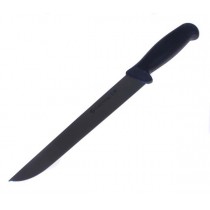 <p>The roast knife has a long 23cm blade, designed for slicing whole cooked meats into even slices without shredding the meat fibre.</p><p>For the full cutlery range see <a href="/en/butchery-and-deli-cutlery.html">Butchery and Deli Cutlery</a>.</p><p><strong>Frequently asked questions</strong></p><p><strong>Why does a roast knife need such a long blade?</strong><br>A long blade lets you cut even slices in a single continuous motion, without having to "saw" back and forth and shred the meat.</p>
 -
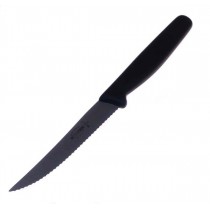 <p>Multi-purpose kitchen knives, for everyday preparation in both professional and home kitchens.</p> <p><strong>Blade length</strong>: 19 or 22cm — choose based on your usual type of cut and preferred grip: shorter blades for precision work, longer ones for wider cuts.</p> <p>For the full cutlery range see <a href="/en/butchery-and-deli-cutlery.html">Butchery and Deli Cutlery</a>.</p> <p><strong>Frequently asked questions</strong></p> <p><strong>Which blade length should I choose?</strong><br>19cm for versatile, easy-to-handle use, 22cm if you regularly work larger cuts or prefer a longer blade.</p>
There are 8 products.
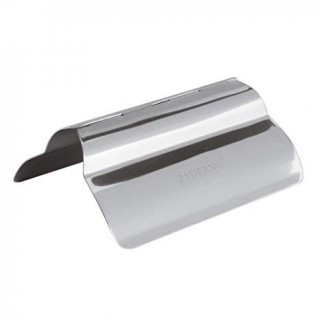
salami tongs length 100 mm stainless steel
Stainless steel salami tongs, 100 mm long: a practical accessory to hold cold cuts firmly in place while slicing on a meat slicer.
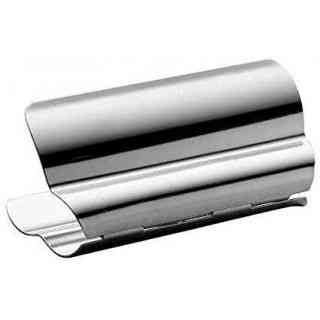
salami tong 120 mm length stainless steel
Stainless steel meat tongs, 120 mm long, slicer accessory: holds the sliced product firmly in place during cutting for greater safety and precision.
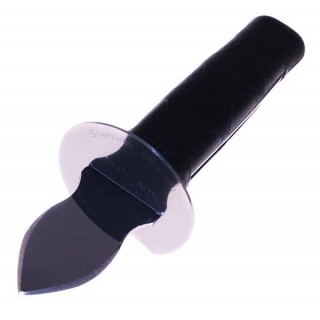
oyster knife
Professional oyster knife (ref. 9.009.093): short, rigid stainless steel blade for shucking oysters with precision and safety. The guard protects the hand if the blade slips off the shell. The tip enters the shell hinge and, with slight leverage, separates the two halves.
- Short, rigid stainless steel blade
- Anti-slip protective guard
- Ref. 9.009.093
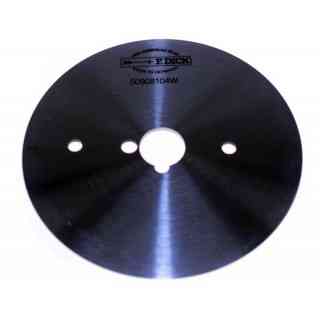
circular blade diameter 80mm hole 13mm for kebab dick knife
Replacement circular blade Ø80 mm with central Ø13 mm bore for the Dick electric kebab knife. Cutting disc that slices meat off the vertical spit (doner/gyros/shawarma); replace when the edge is worn or nicked. Check the Ø13 mm bore against your model.
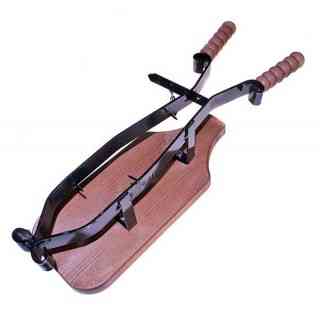
rustic ham clamp
Rustic ham clamp for professionally holding cured ham in place during hand-carving. Reference: 9.003.047.

- -10%
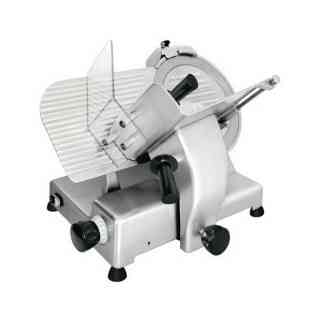
blade sharpening for slicer including two emery stones in rome service offered in 24h!
Ag work solution offers its customers in Rome an exclusive service to sharpen the blade of your slicer.
thanks to our extensive catalog of Smerigli we can find any solution.
exclusive for the area of ??Rome
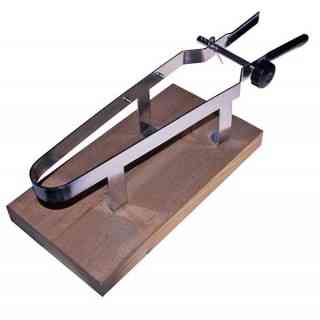
stainless steel rustic ham clamp wooden base
Rustic-style ham clamp, stainless steel with wooden base, to hold the ham in place while slicing by hand.
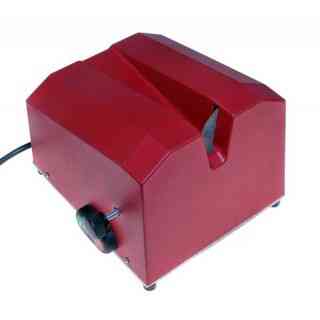
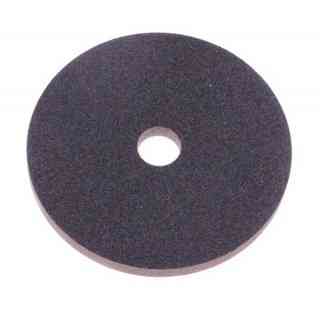
professional emery knife sharpener
RELIABLE PROFESSIONAL GRINDING-WHEEL KNIFE SHARPENER, POWERFUL MOTOR, EASY TO USE, ABLE TO SHARPEN ALL TYPES OF KNIVES WITH VERTICAL POSITIONING, ULTRA-FAST SHARPENING