
Bestsellers
- -10%
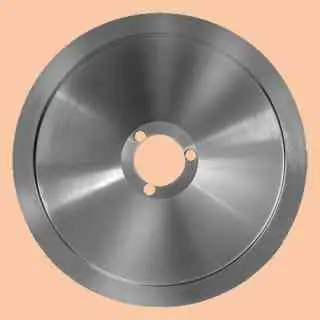
blade for slicer 250 diameter 25cm three hole central hole 40mm c45 rgv fac e
"
BLADE FOR SLICER 250 DIAMETER 25CM THREE HOLE CENTRAL HOLE 40MM C45 RGV FAC E
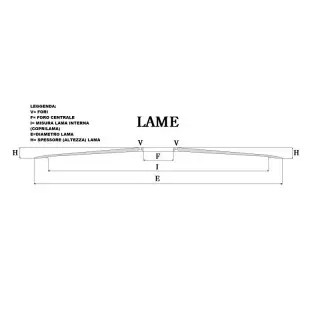
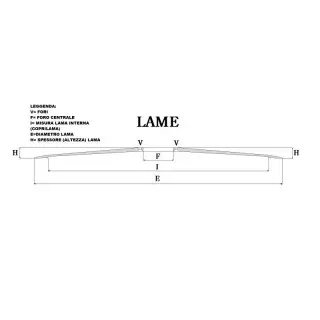
| (E) Diameter Blade | 250 | |
| (V) Number of holes | 3 | |
| (F) Dim. Central hole | 40 | |
| (H) Blade height (thickness) | 17.5 | |
| (I) Inner blade measurement (blade guard) | 210 |
VISIT THE BLOG FOR MORE INFORMATION
"
- -10%
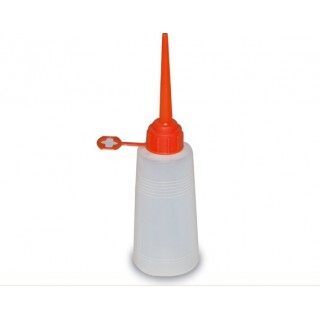
neutral white oil pack for slicers 50 ml
Food-grade neutral white oil, 50 ml, for lubricating gravity-feed and flywheel slicers of any brand: colourless, odourless and tasteless, it protects the carriage, food pusher and blade from friction and rust. Do not use cooking oils.
- -10%
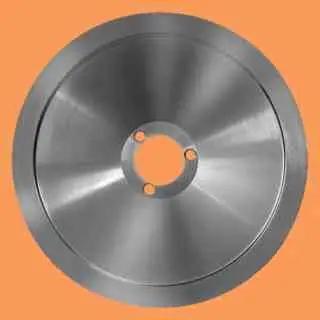
blade for slicer 220 diameter 22cm three hole central hole 40mm c45 rgv and other brands
BLADE FOR SLICER? 220/40/3/180 / 15,5 C45 FOR ABO - KOLOSSAL - OMAS -VAN DALL
(E) Diameter Blade 220
(V) Hole Number 3
(F) Dim. Central Hole 40
(H) Blade height (thickness) 15.5
(I) Internal blade size (cap) 180
VISIT THE BLOG FOR MORE INFORMATION
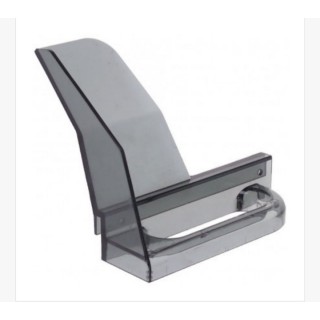
hand protection slicer fac and swedlinghaus model 195 220 250r 250e
Carriage hand guard for FAC and Swedlinghaus gravity-feed slicers, models 195 / 220 / 250R / 250E, CE and CE domestic versions. Safety shield between the hand and the blade during slicing: mandatory component, to be replaced if broken or missing. Hole centre distance 14.9 cm (measurement to check for compatibility). Specific to FAC/Swedlinghaus, not interchangeable with RGV models.

Subcategories
-
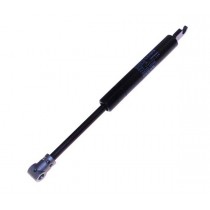 <p>The gas strut (or lift-o-mat damper) supports and guides the opening of light lids and doors, stopping them from staying stuck open or slamming shut.</p> <p><strong>Force in Newtons</strong>: the <strong>0-99N</strong> range is the lightest in the line-up, suited to small, lightweight lids — for example on compact vacuum packers (mod. E60/T60) or kneader lids. For heavier loads, see <a href="/en/gas-struts-100-199-newton.html">100-199N</a> or <a href="/en/gas-struts-1000-1500-newton.html">1000-1500N</a>.</p> <p><strong>How to choose the right replacement</strong>: besides the force in Newtons, what matters is the <strong>stroke</strong> (closed and open length) and the <strong>bore diameter</strong> at the mounting brackets.</p> <p>For the other gas struts, go back to <a href="/en/gas-struts.html">Gas Struts</a>.</p> <p><strong>Frequently asked questions</strong></p> <p><strong>How do I know how many Newtons I need?</strong><br>The force is usually printed on the body of the original strut; alternatively it must be calculated from the weight and geometry of the lid to be supported.</p> <p><strong>Is a 0-99N strut fine for a heavy lid?</strong><br>No: an undersized strut can't hold the weight and the lid will fall back down — you need struts from a higher force range.</p>
 -
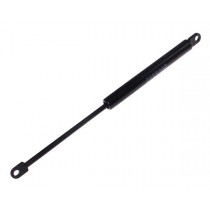 <p>The gas strut (also called a lift-o-mat damper) supports and guides the opening of lids, covers and doors on machines such as heat sealers, vacuum chambers and small vacuum packers, preventing them from staying stuck open or slamming shut.</p> <p><strong>Force in Newtons</strong>: the <strong>100-199N</strong> range covers light-to-medium weight lids — a middle ground between the lighter models (<a href="/en/gas-struts-0-99-newton.html">0-99N</a>) and those for heavier loads (<a href="/en/gas-struts-1000-1500-newton.html">1000-1500N</a>). Too little force and the lid falls back down; too much and it snaps upward: it always needs to be matched to the weight and geometry of the original door.</p> <p><strong>How to choose the right spare part</strong>: besides the force in Newtons, the <strong>stroke length</strong> (extended and retracted length) and the <strong>mounting hole diameter</strong> on the brackets also matter. Brands in range: Lift-o-mat, Valko.</p> <p>For other gas struts go back to <a href="/en/gas-struts.html">Gas Struts</a>.</p> <p><strong>Frequently asked questions</strong></p> <p><strong>How do I know how many Newtons I need?</strong><br>The force is usually printed on the body of the original strut; alternatively it needs to be calculated from the weight and geometry of the lid to be supported.</p> <p><strong>Can I fit a stronger strut than the original?</strong><br>No: an oversized strut makes the lid snap upward instead of guiding it, which is a risk to the user.</p>
 -
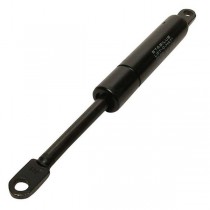 <p>The gas strut (or lift-o-mat damper) supports and guides the opening of heavy lids and doors, stopping them from slamming shut or staying stuck halfway open.</p> <p><strong>Force in Newtons</strong>: the <strong>1000-1500N</strong> range is the most powerful in the line-up, suited to large, heavy lids such as bigger vacuum chamber covers. For lighter loads see <a href="/en/gas-struts-100-199-newton.html">100-199N</a> or <a href="/en/gas-struts-0-99-newton.html">0-99N</a>.</p> <p><strong>How to choose the right replacement</strong>: besides the force in Newtons, what matters is the <strong>stroke</strong> and the <strong>bore diameter</strong> at the mounting brackets.</p> <p>For the other gas struts, go back to <a href="/en/gas-struts.html">Gas Struts</a>.</p> <p><strong>Frequently asked questions</strong></p> <p><strong>Is a 1000-1500N strut fine for a light lid?</strong><br>No: an oversized strut makes the lid snap upward instead of guiding it, which is a risk to the user.</p> <p><strong>How do I know how many Newtons I need?</strong><br>The force is usually printed on the body of the original strut; alternatively it must be calculated from the weight and geometry of the lid.</p>
There is 1 product.

- -10%
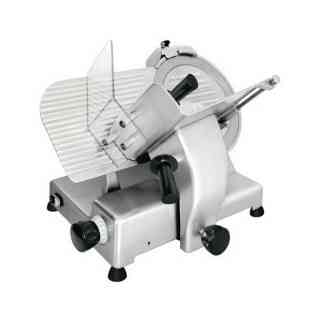
blade sharpening for slicer including two emery stones in rome service offered in 24h!
Ag work solution offers its customers in Rome an exclusive service to sharpen the blade of your slicer.
thanks to our extensive catalog of Smerigli we can find any solution.
exclusive for the area of ??Rome