
Bestsellers
- -10%
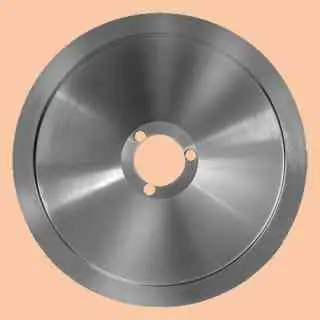
blade for slicer 250 diameter 25cm three hole central hole 40mm c45 rgv fac e
"
BLADE FOR SLICER 250 DIAMETER 25CM THREE HOLE CENTRAL HOLE 40MM C45 RGV FAC E
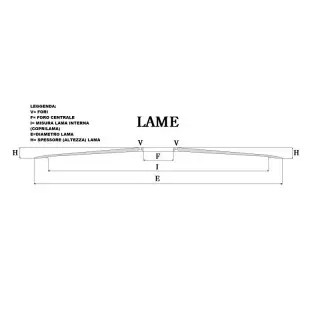
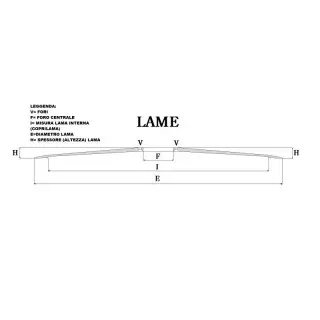
| (E) Diameter Blade | 250 | |
| (V) Number of holes | 3 | |
| (F) Dim. Central hole | 40 | |
| (H) Blade height (thickness) | 17.5 | |
| (I) Inner blade measurement (blade guard) | 210 |
VISIT THE BLOG FOR MORE INFORMATION
"
- -10%
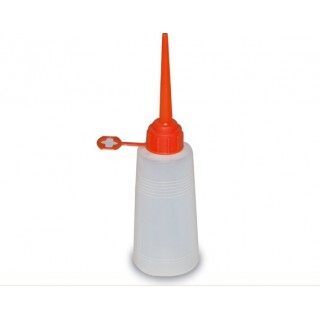
neutral white oil pack for slicers 50 ml
Food-grade neutral white oil, 50 ml, for lubricating gravity-feed and flywheel slicers of any brand: colourless, odourless and tasteless, it protects the carriage, food pusher and blade from friction and rust. Do not use cooking oils.
- -10%
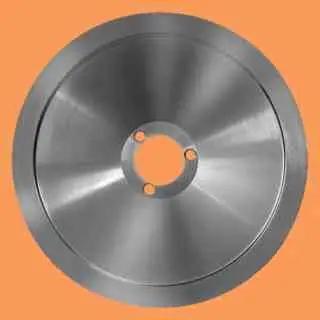
blade for slicer 220 diameter 22cm three hole central hole 40mm c45 rgv and other brands
BLADE FOR SLICER? 220/40/3/180 / 15,5 C45 FOR ABO - KOLOSSAL - OMAS -VAN DALL
(E) Diameter Blade 220
(V) Hole Number 3
(F) Dim. Central Hole 40
(H) Blade height (thickness) 15.5
(I) Internal blade size (cap) 180
VISIT THE BLOG FOR MORE INFORMATION
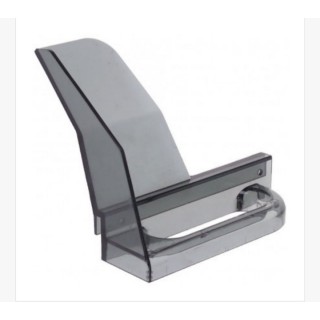
hand protection slicer fac and swedlinghaus model 195 220 250r 250e
Carriage hand guard for FAC and Swedlinghaus gravity-feed slicers, models 195 / 220 / 250R / 250E, CE and CE domestic versions. Safety shield between the hand and the blade during slicing: mandatory component, to be replaced if broken or missing. Hole centre distance 14.9 cm (measurement to check for compatibility). Specific to FAC/Swedlinghaus, not interchangeable with RGV models.

Subcategories
-
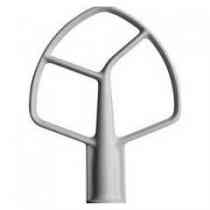 <p>Original accessories for <strong>Fama-branded KitchenAid</strong> stand mixers, models PK45, PK50 and PK70: the interchangeable attachments that fit onto the mixer head for different types of dough and batter.</p> <p><strong>Whip</strong>: for whipping cream, egg whites or light, aerated mixtures.</p> <p><strong>Hook</strong>: for kneading dense, heavy doughs (bread, pizza), available in stainless steel or enamelled versions.</p> <p><strong>Spatula</strong>: for soft mixtures, also available with a flexible edge for better scraping from the bowl walls.</p> <p><strong>Covers</strong>: pourer cover (to add ingredients while mixing) and bowl cover.</p> <p>Always check the exact model (PK45, PK50 or PK70) before ordering: accessories are not interchangeable between the three sizes.</p> <p>For other stand mixer parts go back to <a href="/en/planetary-mixers.html">Planetary Mixers</a>.</p> <p><strong>Frequently asked questions</strong></p> <p><strong>Do PK45 accessories fit the PK50?</strong><br>No, each mixer size has its own attachments sized for that bowl and head: check the exact model.</p> <p><strong>Stainless steel or enamelled hook/spatula: which is better?</strong><br>They're functionally equivalent; the choice comes down to appearance preference and wear resistance over time.</p>
 -
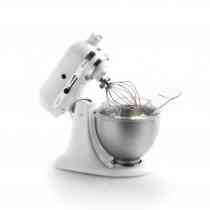 <p>Fama-branded planetary mixers, KitchenAid-compatible, for pastry-making and baking in small volumes: whipping, light doughs and versatile jobs.</p> <p><strong>Three capacities</strong>: <strong>4.5 litres</strong> (PK45), <strong>5.5 litres</strong> (PK50) and <strong>6.9 litres</strong> (PK70) — the choice depends on the typical processing volume of your workshop.</p> <p>For original accessories (whisk, hook, spatula) see <a href="/en/kitchenaid-fama-accessories.html">KitchenAid Fama Accessories</a>. For the complete range go back to <a href="/en/planetary-mixers.html">Planetary and Spiral Mixers</a>.</p> <p><strong>Frequently asked questions</strong></p> <p><strong>Which capacity should I choose?</strong><br>4.5L for a small workshop, 6.9L for larger processing volumes while keeping the planetary mixer's versatility.</p> <p><strong>Are the accessories interchangeable between the three capacities?</strong><br>No, each capacity has accessories (whisk, hook, spatula) sized for its own bowl.</p>
 -
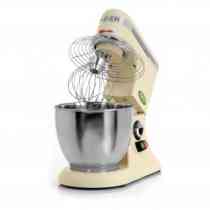 <p>Fama planetary mixers from the Baker PM/PK line, a step up from the KitchenAid-style planetary mixers for larger processing volumes while keeping the planetary mixer's versatility.</p> <p><strong>Models available</strong>: <strong>PM5</strong> (5 litres), <strong>PM7</strong> (7 litres) and <strong>PK8</strong> (8 litres) — intermediate capacities between the compact planetary mixers and the large-volume Bakerline mixers.</p> <p>For even larger capacities see <a href="/en/fama-planetary-mixers-bakerline.html">Bakerline Planetary Mixers</a>; for the compact range see <a href="/en/kitchenaid-fama-planetary-mixers.html">KitchenAid Fama Planetary Mixers</a>.</p> <p><strong>Frequently asked questions</strong></p> <p><strong>What's the difference from the KitchenAid Fama planetary mixers?</strong><br>The Baker PM/PK line offers greater capacity (5-8 litres versus 4.5-6.9), designed for more intensive use.</p> <p><strong>When is it worth moving up to the Bakerline?</strong><br>If your processing volume consistently exceeds 8 litres, the Bakerline offers capacities from 10 to 30 litres.</p>
 -
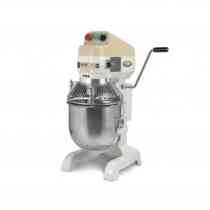 <p>Fama planetary mixers from the Bakerline range, the largest-capacity line for workshops with intensive pastry-making and baking production.</p> <p><strong>Capacities</strong>: from <strong>10 litres</strong> (three-phase or single-phase) to <strong>20 litres</strong> (single-phase) up to <strong>30 litres</strong> (three-phase or single-phase) — the largest size in the Fama planetary mixer range.</p> <p>For smaller capacities see <a href="/en/fama-planetary-mixers-baker-pm-pk.html">Baker PM/PK Planetary Mixers</a> or <a href="/en/kitchenaid-fama-planetary-mixers.html">KitchenAid Fama Planetary Mixers</a>.</p> <p><strong>Frequently asked questions</strong></p> <p><strong>Which Bakerline capacity should I choose?</strong><br>10 litres for workshops with medium-to-high production, 20-30 litres for very intensive processing volumes.</p> <p><strong>Single-phase or three-phase: which is better?</strong><br>It depends on the power connection available in your workshop: both versions are available on the 10 and 30 litre models.</p>
 -
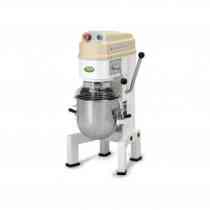 PLANETARIE BAKER PA
 -
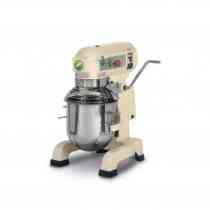 PLANETARIE BAKER PGN FAMA
 -
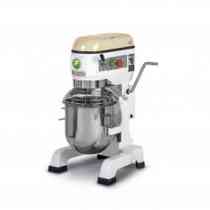 PLANETARIE BAKER PBN FAMA
 -
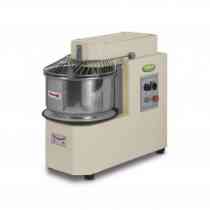 <p>The Fama spiral mixer with a <strong>fixed head</strong> is designed for workshops handling medium-to-high hydration doughs (bread, pizza, focaccia): the spiral hook rotates around the fixed bowl, reproducing the motion of hand-kneading with less dough overheating than a plunging-arm mixer.</p> <p><strong>Capacity</strong>: 18 or 25 kg of flour per batch. <strong>Power supply</strong>: single-phase or three-phase version depending on the connection available in your workshop. <strong>Two speeds</strong>: on DV models the first speed blends the ingredients, the second (faster) develops the final gluten structure of the dough.</p> <p><strong>Fixed or tilting head</strong>: compared to the <a href="/en/fama-spiral-mixers-tilting-head.html">tilting head</a> version, the fixed head is smaller and cheaper; the tilting version flips up to make it easier to clean the bowl and remove the dough.</p> <p>For mixer spare parts see <a href="/en/kneaders.html">Mixer Spare Parts</a>.</p> <p><strong>Frequently asked questions</strong></p> <p><strong>Is 18 or 25 kg capacity better?</strong><br>18kg is enough for workshops with regular small-to-medium production; 25kg pays off with larger volumes or dough prepared in a single batch.</p> <p><strong>What is the second speed for?</strong><br>It lets you blend at low speed and then develop the gluten structure at a higher speed, for a stronger gluten network on bread and pizza doughs.</p>
 -
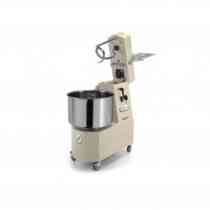 <p>The Fama spiral mixer with a <strong>tilting head</strong> adds to the fixed-head version the ability to flip the hook assembly upward: the bowl stays fully accessible for cleaning and for removing the dough without having to scrape it out by hand from the bottom.</p> <p><strong>Capacity</strong>: 18 or 25 kg of flour per batch. <strong>Power supply</strong>: single-phase or three-phase. <strong>Two speeds</strong>: on DV models the first speed blends the ingredients, the second develops the dough's gluten structure.</p> <p><strong>When the tilting head is worth it</strong>: especially in workshops running several dough batches a day, where quick bowl cleaning and easy dough removal save time on every batch. Compared to the <a href="/en/fama-spiral-mixers-fixed-head.html">fixed head</a>, the price is higher but day-to-day operation is more convenient.</p> <p>For mixer spare parts see <a href="/en/kneaders.html">Mixer Spare Parts</a>.</p> <p><strong>Frequently asked questions</strong></p> <p><strong>Is the extra cost over the fixed head worth it?</strong><br>Yes if you process several batches a day: the time saved on cleaning and dough removal quickly offsets the price difference.</p> <p><strong>Does the tilting head need more maintenance?</strong><br>No, the lifting mechanism is robust and only needs the same routine maintenance as the fixed head.</p>
There are 5 products.
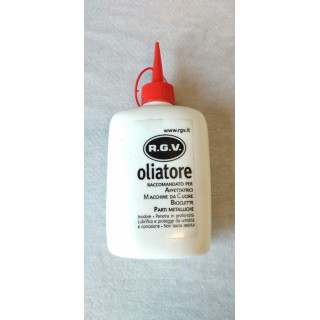
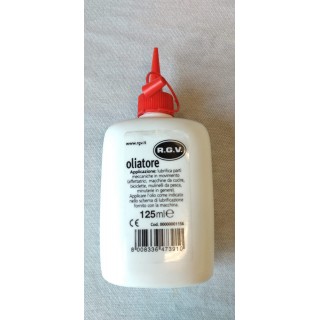
lubrificant for mechanical parts rgv
RGV lubricating oil in a 125 ml oil can for the mechanical parts of slicers. Suitable for food-service machines.

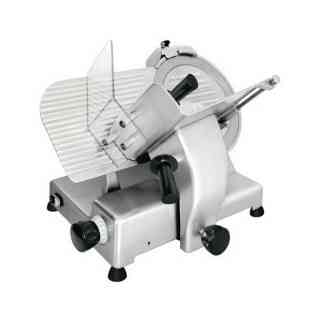
- -10%
blade sharpening for slicer including two emery stones in rome service offered in 24h!
Ag work solution offers its customers in Rome an exclusive service to sharpen the blade of your slicer.
thanks to our extensive catalog of Smerigli we can find any solution.
exclusive for the area of ??Rome
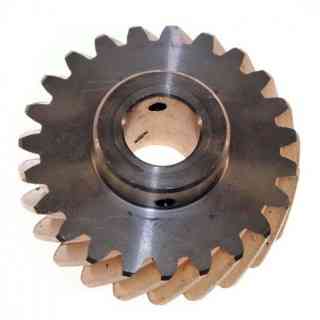
bronze gear for planetary 5k5 kitchenaid diam. 36 hole 9.5 z 23
23-tooth bronze gear for KitchenAid 5K5 series stand mixers, drive gear of the planetary assembly.
- Outer diameter 36 mm
- Bore 9.5 mm · Z 23 · thickness 15 mm
- Bronze construction · ref. FAMTRI0078
- Equivalent to codes W10112253 / 241803 / 4162897
Exploded view 92 — AGWSPK088.
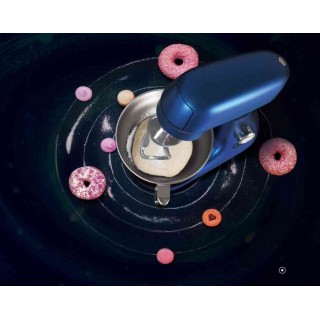
- On sale!
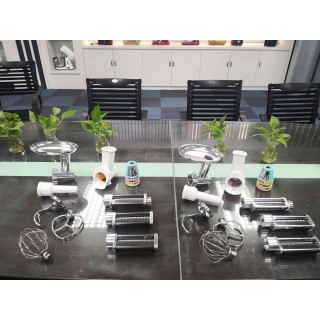
Stand mixer Easten Premium EF716 with many accessories all included
Stand mixer Easten Premium EF716 with many accessories all included. 5 appliance kitchen in one
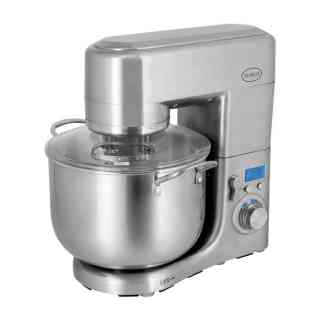
planetary mixer pastaprof rgv 10 liters
Planetary mixer with 10lt bowl that allows you to work a large amount of dough. Equipped with double hook for greater efficiency in kneading.