
Bestsellers
- -10%
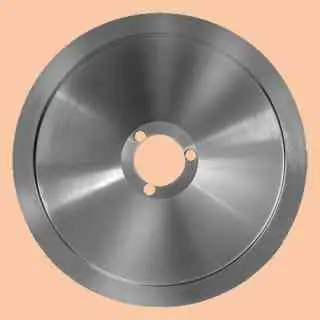
blade for slicer 250 diameter 25cm three hole central hole 40mm c45 rgv fac e
"
BLADE FOR SLICER 250 DIAMETER 25CM THREE HOLE CENTRAL HOLE 40MM C45 RGV FAC E
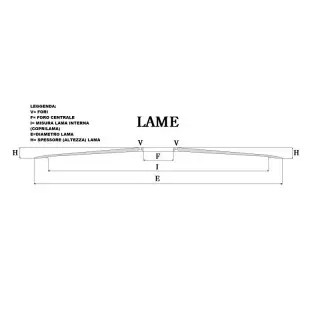
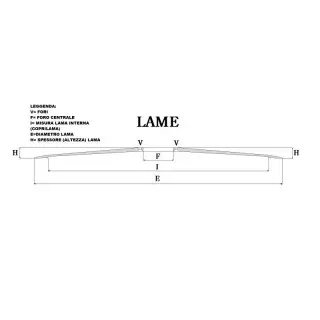
| (E) Diameter Blade | 250 | |
| (V) Number of holes | 3 | |
| (F) Dim. Central hole | 40 | |
| (H) Blade height (thickness) | 17.5 | |
| (I) Inner blade measurement (blade guard) | 210 |
VISIT THE BLOG FOR MORE INFORMATION
"
- -10%
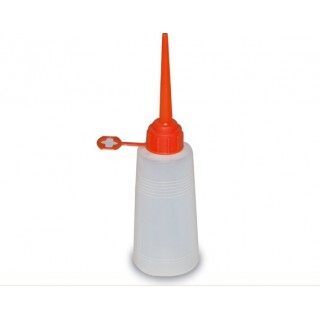
neutral white oil pack for slicers 50 ml
Food-grade neutral white oil, 50 ml, for lubricating gravity-feed and flywheel slicers of any brand: colourless, odourless and tasteless, it protects the carriage, food pusher and blade from friction and rust. Do not use cooking oils.
- -10%
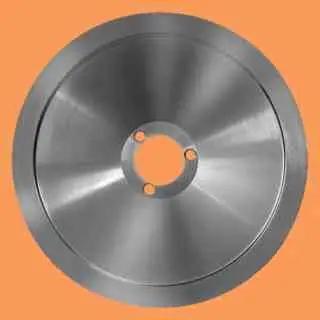
blade for slicer 220 diameter 22cm three hole central hole 40mm c45 rgv and other brands
BLADE FOR SLICER? 220/40/3/180 / 15,5 C45 FOR ABO - KOLOSSAL - OMAS -VAN DALL
(E) Diameter Blade 220
(V) Hole Number 3
(F) Dim. Central Hole 40
(H) Blade height (thickness) 15.5
(I) Internal blade size (cap) 180
VISIT THE BLOG FOR MORE INFORMATION
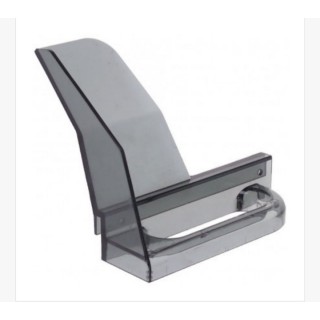
hand protection slicer fac and swedlinghaus model 195 220 250r 250e
Carriage hand guard for FAC and Swedlinghaus gravity-feed slicers, models 195 / 220 / 250R / 250E, CE and CE domestic versions. Safety shield between the hand and the blade during slicing: mandatory component, to be replaced if broken or missing. Hole centre distance 14.9 cm (measurement to check for compatibility). Specific to FAC/Swedlinghaus, not interchangeable with RGV models.

Subcategories
-
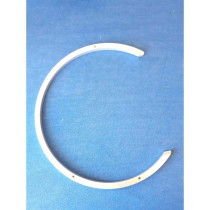 <p>The blade protection ring surrounds the outer edge of the blade, leaving only the portion needed for cutting accessible — an extra layer of safety on top of the blade cover alone.</p> <p><strong>Available versions</strong>: simple ring, or a <strong>ring support with built-in sharpener</strong> (for models without a separate fixed sharpener) — check which version your slicer uses.</p> <p><strong>Mounting screws</strong>: the screws that fix the ring to the machine are also available separately, useful if only those are damaged or lost.</p> <p><strong>Compatibility by brand</strong>: available for RGV (Lusso 250, Dolly 300A, Special Edition, all 195GL/220GL/250GL Luxury models), Sirman (mod. Leonardo, Smart 250 CE, Mirra 300, Agata), Omas (mod. 350) and Swedlinghaus (mod. AF370VS-GR).</p> <p>For the blade cover see <a href="/en/blade-cover.html">Blade Cover</a>; for other slicer spare parts go back to <a href="/en/slicer.html">Slicer Spare Parts</a>.</p> <p><strong>Frequently asked questions</strong></p> <p><strong>What's the difference between the blade protection ring and the blade cover?</strong><br>The blade cover shields the cutting edge of the blade; the blade protection ring is an additional guard around the blade, present on some models alongside the blade cover.</p> <p><strong>Does my model have a sharpener built into the ring?</strong><br>Only certain versions (without a separate fixed sharpener) have one: check your specific model before ordering.</p>
 -
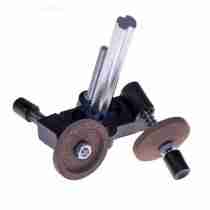 <p>The sharpener is the unit mounted on the slicer's carriage that houses the emery stones and lets you sharpen the blade without removing it from the machine.</p> <p><strong>Types</strong>: <strong>complete</strong> sharpener (with protective cover), <strong>without cover</strong>, <strong>removable</strong> (for cleaning) and <strong>carriage-mounted</strong> versions — the choice depends on your slicer's original configuration.</p> <p><strong>Compatibility by brand and model</strong>: available for ABM (e.g. mod. 935, 9300, GD-UNI), ABO (for carriage or Mignon model), Arsa (e.g. mod. 220/250, A350/370i), Atoma (mod. 250/300), Bizerba (mod. Settebello) and RGV (removable, models 195/220/250) — always check brand and model before ordering, the mounting to the carriage changes from brand to brand.</p> <p>Abrasive emery stones are sold separately: see <a href="/en/emery.html">Emery Stones</a> to find the correct size.</p> <p><strong>Frequently asked questions</strong></p> <p><strong>Does the sharpener already include the emery stones?</strong><br>It depends on the specific listing: always check whether the product includes the emery stones or if they need to be ordered separately.</p> <p><strong>Can I fit a sharpener from another brand on my slicer?</strong><br>Only if the mounting system to the carriage matches: between different brands both the fitting and the shape often change.</p>
 -
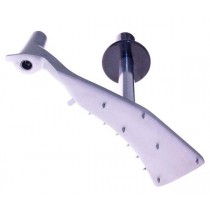 <p>The food pusher arm holds the food in place and pushes it against the blade during cutting — an assembly made up of a foot piece (which presses the item), a sliding rod and, where fitted, a rack for automatic feed.</p> <p><strong>Main components</strong>: <strong>foot piece</strong> (available with or without extension depending on the model), <strong>rod</strong> (round, in various lengths and diameters, e.g. Ø8mm) and stainless steel <strong>rack</strong> for the feed mechanism (specific to mounting centre distance and length).</p> <p><strong>How to choose the right part</strong>: check the exact machine model (e.g. FAC 220/250E/275E/250i/275i/300E/350i/370i, RGV Ausonia/Mary Silver/Luxury, Sirman Mirra) and rod diameter/length — measurements specific to each version.</p> <p>For the hand guard and related protections see <a href="/en/slicer.html">Slicer Spare Parts</a>.</p> <p><strong>Frequently asked questions</strong></p> <p><strong>What's the difference between the foot piece with and without extension?</strong><br>The extension increases the gripping surface for longer or bulkier items; check which version your machine has before ordering.</p> <p><strong>How do I choose the correct rod?</strong><br>Measure the diameter and length of the original rod with a caliper: both figures must match for correct fitting.</p>
 -
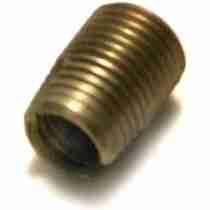 <p>The bushing is a cylindrical sleeve that acts as a sliding bearing between two parts in relative motion — it protects the pin or shaft running through it from direct wear, and is cheaper to replace than the part it protects.</p> <p><strong>Where it's found</strong>: on the <strong>blade guard</strong> (threaded protection around the tie rod), on the <strong>carriage slide</strong> (lets the food carriage glide along the guide rail) and on the <strong>handle/knob</strong> (threaded support bushing).</p> <p><strong>Materials</strong>: <strong>nylon</strong> (quiet, low-friction sliding) or <strong>brass</strong> (more resistant, used on grinding wheel shafts and parts under heavier loads).</p> <p><strong>How to choose the right part</strong>: you need inner diameter, outer diameter and height; these are brand and model specific — Arsa, Ato, CEG, ESS, FAC, Kolossal, Noaw and others use different measurements even for similarly-looking parts.</p> <p>For other slicer parts go back to <a href="/en/slicer.html">Slicer Spare Parts</a>.</p> <p><strong>Frequently asked questions</strong></p> <p><strong>Why does the bushing wear out before the pin?</strong><br>That's its purpose: being a cheaper, easy-to-replace part, it absorbs the friction of sliding motion instead of the pin or shaft.</p> <p><strong>How do I measure the bushing I'm replacing?</strong><br>Measure inner diameter, outer diameter and height with a caliper: these are the three figures needed for the correct part.</p>
 -
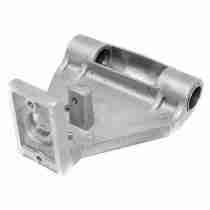 <div class="tw-ta-container tw-nfl" id="tw-target-text-container"> <pre class="tw-data-text tw-ta tw-text-medium" id="tw-target-text" dir="ltr"><span lang="en" xml:lang="en">dinghy - under guide</span></pre> <p><span lang="en" xml:lang="en"> </span></p> <pre class="tw-data-text tw-ta tw-text-medium" lang="en" xml:lang="en"></pre> </div>
 -
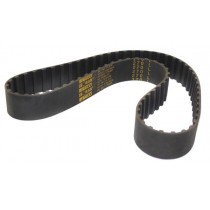 <p>The toothed (or synchronous) belt transmits motion without slipping thanks to teeth that mesh with the pulley — a different technology from the flat or trapezoidal belts fitted on other slicer models.</p> <p><strong>Available profiles</strong>: this range mainly covers <strong>L</strong> and <strong>XL</strong> profile belts — two toothing standards with a different pitch, not interchangeable: an XL belt won't mesh with a pulley made for an L profile.</p> <p><strong>How to read the dimensions</strong>: each belt is identified by <strong>profile, outer length and width</strong> (for example 150XL 037 H.10 means XL profile, length code and 10mm width) — all three pieces of information are needed for the correct replacement.</p> <p>If your slicer uses a different drive technology, see <a href="/en/flat-belts.html">Flat Belts</a> or <a href="/en/trapezoidal-belt.html">Trapezoidal Belt</a>.</p> <p><strong>Frequently asked questions</strong></p> <p><strong>What's the difference between L and XL profile?</strong><br>They're two toothing standards with a different pitch: a toothed belt for one profile won't mesh with pulleys made for the other profile.</p> <p><strong>How do I measure the toothed belt I'm replacing?</strong><br>Check the code printed on the side of the original belt (profile, length and width); alternatively count the teeth and measure the width with a caliper.</p>
 -
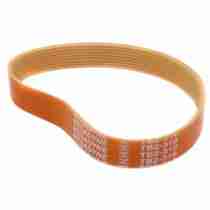 <p>Multi-ribbed flat belts transmit motion from the motor to the blade in slicers: the ribs on the inner surface provide the grip needed for constant, slip-free rotation.</p> <p><strong>Available profiles</strong>: this range mainly covers <strong>TB2</strong> and <strong>J</strong> profile belts — two ribbing standards that differ in pitch and rib size, and are not interchangeable.</p> <p><strong>How to read the dimensions</strong>: each belt is identified by three measurements — width (mm), outer length (mm) and number of ribs, for example TB2 16x310 with 8 ribs. All three are needed for a correct replacement: two belts of the same length but a different number of ribs are not compatible.</p> <p><strong>When to replace it</strong>: a worn belt looks smooth, cracked or stretched — typical symptoms are a blade that slows under load, unusual noise or slight slipping at start-up.</p> <p><strong>How to measure the belt you're replacing</strong>: count the visible ribs, measure the width with a caliper and, if possible, the outer length (inner circumference); alternatively, the code printed on the side of the original belt is the most reliable reference.</p> <p>If your slicer uses a different type of drive, also check <a href="/en/toothed-belts.html">Toothed Belts</a> or <a href="/en/trapezoidal-belt.html">Trapezoidal Belt</a>.</p> <p><strong>Frequently asked questions</strong></p> <p><strong>What's the difference between TB2 and J profile?</strong><br>They're two ribbing standards with a different pitch: a TB2 belt won't fit pulleys made for a J profile and vice versa.</p> <p><strong>How do I count the ribs on my belt?</strong><br>Count them directly on the inner side of the worn belt: it's the most reliable data along with the width measured with a caliper.</p>
 -
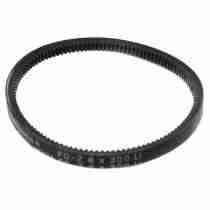 <p>The trapezoidal (V-section) belt transmits motion between motor and gearbox on some slicer models — a different technology from the multi-ribbed flat or toothed belts fitted on other models.</p> <p><strong>How to read the dimensions</strong>: each belt is identified by <strong>section x length</strong> (for example 6x300, 8x475) — the section (6 or 8mm) indicates the width of the V profile, the length is the belt's outer length; both measurements must match the original, sections are not interchangeable.</p> <p><strong>When to replace it</strong>: a worn trapezoidal belt looks shiny, cracked or stretched, with typical symptoms of slipping or noise at start-up.</p> <p>If your slicer uses a different drive technology, see <a href="/en/flat-belts.html">Flat Belts</a> or <a href="/en/toothed-belts.html">Toothed Belts</a>.</p> <p><strong>Frequently asked questions</strong></p> <p><strong>How do I measure the trapezoidal belt I'm replacing?</strong><br>Measure the width of the V profile (section, typically 6 or 8mm) and the outer length; the code printed on the side of the original belt, if readable, is the most reliable reference.</p> <p><strong>Does an 8mm belt fit where a 6mm one was?</strong><br>No, different sections don't correctly engage pulleys sized for the other section.</p>
 -
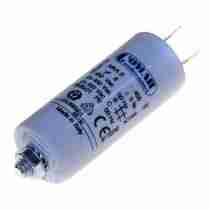 <p>The slicer motor capacitors listed here are part of the <a href="/en/slicer.html">Slicer Spare Parts</a> range.</p> <p>For the complete guide to choosing the correct capacitance (mF/µF and voltage) see the dedicated page <a href="/en/capacitors-for-slicers-and-meat-grinders.html">Capacitors for Slicers and Meat Grinders</a>.</p>
 -
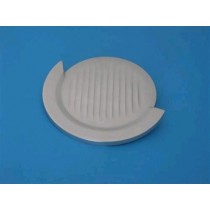 <p>The blade cover (or blade guard) is the protective disc that covers the cutting edge of the blade, leaving accessible only the portion needed for cutting — an essential safety component for the operator.</p> <p><strong>How to choose the right part</strong>: check the <strong>diameter</strong> of the blade it fits (e.g. 195, 220, 250, 275, 300) and the <strong>fitting type</strong> at the centre of the blade — <strong>round</strong> (threaded, e.g. Ø6mm) or <strong>hexagonal</strong> — the two types are not interchangeable.</p> <p><strong>Compatibility by brand</strong>: available for Fama, RGV (e.g. mod. GL/GS home and Special Edition), FAC (e.g. mod. 250 tilted and vertical), Sirman (square or hexagonal fitting), Abo (mod. Euro 300) and Manconi (mod. 350).</p> <p>For the blade itself see <a href="/en/blades-slicer.html">Blades for Slicers</a>; for other parts go back to <a href="/en/slicer.html">Slicer Spare Parts</a>.</p> <p><strong>Frequently asked questions</strong></p> <p><strong>How do I know if the fitting is round or hexagonal?</strong><br>Look at the seat at the centre of the original blade cover: round and threaded for the round fitting, six-sided for the hexagonal — check the one you're replacing before ordering.</p> <p><strong>Does the blade cover need to match the blade's diameter?</strong><br>Yes, the blade cover's diameter must match the blade fitted on your slicer.</p>
 -
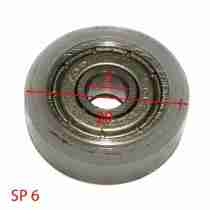 <p>Ball bearings allow the smooth rotation of the slicer's carriage, blade hub and sharpener hub, as well as some meat grinder components.</p> <p><strong>How to choose the right part</strong>: standard bearings are identified by an international code (e.g. 625-2Z, 626-2Z, 6000 2RS, 6203) that indicates outer diameter, bore and shield type — <strong>ZZ/2Z</strong> (metal shielded) or <strong>2RS</strong> (with rubber seal, better protected from dust and residue). Some bearings are instead <strong>thrust</strong> type (for loads along the axis) or coated/with collar for specific applications.</p> <p><strong>Compatibility</strong>: available for Arsa, Atoma, CEG, ESS, Kolossal and Omas — always check the standard code printed on the original bearing, often the most reliable reference for replacement.</p> <p>For other slicer parts go back to <a href="/en/slicer.html">Slicer Spare Parts</a>.</p> <p><strong>Frequently asked questions</strong></p> <p><strong>How do I read a standard bearing code?</strong><br>The code (e.g. 6203) follows an international numbering system identifying size and series: look for it printed on the side of the original bearing.</p> <p><strong>What's the difference between ZZ and 2RS?</strong><br>ZZ (metal shielded) protects less from dust and moisture than 2RS (rubber seal), which is better suited to environments with food residue or frequent washing.</p>
 -
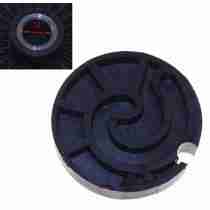 <p>The eccentric cam (also called the snail cam) works together with the graduated knob: as it rotates, it gradually moves the blade or the support plate, adjusting slice thickness.</p> <p><strong>How to choose the right part</strong>: check the outer <strong>diameter</strong>, the centre <strong>hole diameter</strong> and the slicer model — measurements specific to each manufacturer, not standardised across brands.</p> <p><strong>Variable-pitch conical version</strong>: on some models (e.g. Galileo Evo, Leonardo Evo) the cam is <strong>conical</strong>, with variable pitch along its travel — allowing finer thickness adjustment than a traditional cam.</p> <p><strong>Compatibility by brand</strong>: available for Abo (mod. 220 Mignon, mod. A250F), Arsa, Atoma (mod. Europa), Sirman (mod. Mirra, CE) and for the Leonardo/Galileo/Kelly range.</p> <p>For the connected graduated knob see <a href="/en/graduated-knob.html">Graduated Knob</a>; for other parts go back to <a href="/en/slicer.html">Slicer Spare Parts</a>.</p> <p><strong>Frequently asked questions</strong></p> <p><strong>How do I measure the eccentric cam I'm replacing?</strong><br>Measure outer diameter and centre hole diameter with a caliper, and check whether your machine has the traditional or conical variable-pitch version.</p> <p><strong>Why is the cam conical on some models?</strong><br>The variable-pitch conical profile allows finer, more progressive thickness adjustment than a constant-pitch cam.</p>
 -
 <p>The slicer's gear transmits motion from the motor to the blade: as with the meat grinder, <strong>fibre</strong> and <strong>nylon</strong> materials are chosen to be weaker than steel and break first in case of overload or jamming, protecting the motor; <strong>bronze</strong> gears are more durable but lack this protective function.</p> <p><strong>How to choose the right part</strong>: count the teeth (code <strong>Z</strong>, e.g. Z25, Z30, Z31) and check the diameter and centre hole. Some models have a <strong>toothed sector</strong> (a partial gear, not a full ring) instead of a full gear. <strong>Shock absorbers</strong> (inserts that cushion the impact on engagement, e.g. with a 6mm shock absorber) are an extra protection found only on some models.</p> <p><strong>Compatibility by brand</strong>: available for Atoma, Bizerba, Berkel, FIA Boston and Arsa — even with the same number of teeth, gears from different brands are often not interchangeable because of different hole size and mounting seat.</p> <p>For meat grinder or mixer gears see <a href="/en/gears-for-meat-grinder.html">Gears for Meat Grinder</a> or <a href="/en/gear-for-kitchen-mixer.html">Gear for Mixer</a>.</p> <p><strong>Frequently asked questions</strong></p> <p><strong>Why choose fibre/nylon over bronze?</strong><br>Fibre and nylon break first in case of overload, protecting the motor; bronze lasts longer but in case of a jam the overload transfers to the motor.</p> <p><strong>What is a toothed sector?</strong><br>It's a partial gear (not a full ring) used on some models instead of a full gear: the two are not interchangeable.</p>
 -
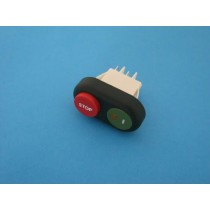 <p>The electric switches for slicers listed here are part of the <a href="/en/slicer.html">Slicer Spare Parts</a> range.</p><p>For the complete guide on switch types and how to choose the correct one see the dedicated page <a href="/en/switches-and-selectors.html">Switches and Selectors</a>.</p>
 -
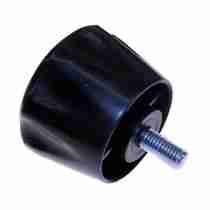 <p>The locking knob holds the carriage in place during cutting, preventing unwanted movement.</p> <p><strong>Types</strong>: knob complete with pin, knob with bushing (10 or 12mm diameter), <strong>blade-guard interlock assembly</strong> (locks the blade guard and carriage together) and <strong>screw-type carriage locking knob</strong> (Ø65 diameters, M10/M12 threads).</p> <p><strong>How to choose the correct part</strong>: check the exact model of your slicer and, for pin versions, the pin's diameter and length (e.g. Ø12x43mm) — specific measurements that aren't standard across different manufacturers.</p> <p><strong>Compatibility by brand</strong>: available for Atoma, Bizerba (mod. 8/21, polished or chrome), Italiana Macchi and the Leonardo/Galileo range (350/370/385).</p> <p>For other knobs and handles go back to <a href="/en/knob-handle.html">Knobs and Handles</a> or <a href="/en/slicer.html">Slicer Spare Parts</a>.</p> <p><strong>Frequently asked questions</strong></p> <p><strong>How do I measure the pin to be replaced?</strong><br>Measure diameter and length with a caliper: both must match the original.</p> <p><strong>What's the blade-guard interlock assembly for?</strong><br>It locks the blade guard and carriage together at the same time, useful for safety during maintenance or cleaning.</p>
 -
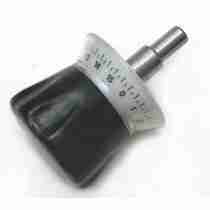 <p>The graduated knob (also called the dial) is the control that sets the slicer's cutting thickness, moving the blade relative to the support plate.</p> <p><strong>Components</strong>: the assembly includes the <strong>pin</strong> (the threaded rod connected to the internal mechanism) and the <strong>cover plate</strong> (the visible graduated dial, often available on its own if only that part is damaged).</p> <p><strong>How to choose the right part</strong>: you need the pin's diameter and length, plus the cover plate's diameter (for example pin Ø12mm length 35mm, cover plate Ø55mm) — measurements specific to brand and model, not standard across manufacturers.</p> <p><strong>Compatibility by brand</strong>: available for RGV (e.g. Luxor/Olimpia assembly), Fia Boston (mod. Plus 350E), Bizerba (mod. SE12), Arsa, Atoma and Essedue (mod. 220/250/275).</p> <p>For other slicer parts go back to <a href="/en/slicer.html">Slicer Spare Parts</a>.</p> <p><strong>Frequently asked questions</strong></p> <p><strong>Do I need to replace the whole assembly or just the cover plate?</strong><br>If the adjustment mechanism works but only the graduated dial is damaged or unreadable, the cover plate alone is often enough.</p> <p><strong>How do I measure the pin I'm replacing?</strong><br>Measure the pin's diameter and length with a caliper, and the cover plate's diameter: these are the figures needed for the correct part.</p>
 -
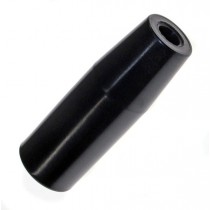 <p>Knobs, handles and grips are the slicer's manual touchpoints: they let you lift the arm, move the carriage or operate the food pusher safely.</p> <p><strong>Main types</strong>: <strong>arm-lift handle</strong> (to raise the food-holding arm, also available with extension or locking screw), <strong>food pusher grip</strong> (with or without extension), <strong>carriage knob</strong> (U or L shaped depending on the mechanism) and grips with a built-in bushing (in various diameters, e.g. 8 or 10mm).</p> <p><strong>Compatibility by brand</strong>: available for Arsa, Atoma, Fia, CEG, Kolossal and Italiana Macchi — the way it attaches to the arm or carriage changes from model to model, always check compatibility before ordering.</p> <p>For the graduated knob that adjusts cutting thickness see instead <a href="/en/graduated-knob.html">Graduated Knob</a>; for other slicer parts go back to <a href="/en/slicer.html">Slicer Spare Parts</a>.</p> <p><strong>Frequently asked questions</strong></p> <p><strong>What's the difference with the graduated knob?</strong><br>The graduated knob adjusts cutting thickness; the knobs and handles in this category are instead used to lift or move the arm, carriage or food pusher.</p> <p><strong>How do I choose the right grip for my lift arm?</strong><br>Check the fixing system (screw, snap-fit, bushing) and the diameter of any built-in bushing, comparing them with the original part.</p>
 -
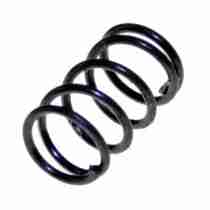 <p>Spare parts for flywheel slicers, the traditional crank-operated model where cutting happens by manually turning a large flywheel.</p> <p><strong>Tray</strong>: the transparent food-holder plate in <strong>PMMA</strong> (acrylic), model-specific (e.g. FAC 250). <strong>Springs</strong>: fitted on the motor's worm screw or on the food-pusher arm (Omega VSX and Bizerba Filat M3TS models), they return moving components to position during use.</p> <p>For other slicer parts go back to <a href="/en/slicer.html">Slicer Spare Parts</a>.</p> <p><strong>Frequently asked questions</strong></p> <p><strong>What is the tray for?</strong><br>It's the transparent plate the food rests on while cutting on a flywheel slicer, made from durable plastic (PMMA).</p> <p><strong>How do I choose the right spring?</strong><br>Based on the exact model and position (motor worm screw or arm): each brand has dedicated, non-interchangeable components.</p>
 -
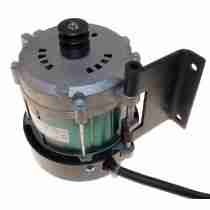 <p>The motor transmits motion to the slicer's blade; on many models you can also replace just the <strong>stator winding</strong> (the laminated pack with the electrical winding) instead of the complete motor, when the rest of the motor assembly is still working.</p> <p><strong>How to choose the right winding</strong>: you need the <strong>laminated pack height</strong> (e.g. 35, 40, 50, 60, 70, 80mm), the <strong>outer diameter</strong> (typically 110-130mm) and the <strong>voltage</strong> (230V single-phase or 380V three-phase, some 4-pole) — all three measurements must match the original.</p> <p><strong>Complete motors</strong>: also available ready to use for specific models, e.g. Abo Euro 300, FAC 250i/300E/300CL, RGV 350, Noaw mod. 300 CE (also compatible with gravity-feed Berkel) — in ventilated versions for models with forced cooling.</p> <p>For other slicer parts go back to <a href="/en/slicer.html">Slicer Spare Parts</a>.</p> <p><strong>Frequently asked questions</strong></p> <p><strong>Is it worth replacing just the stator or the whole motor?</strong><br>If the bearings, shaft and fan are in good condition, replacing just the stator winding is often cheaper than a complete motor.</p> <p><strong>How do I measure the laminated pack I'm replacing?</strong><br>Measure the height of the laminated pack and the stator's outer diameter, and check the voltage on the original nameplate.</p>
 -
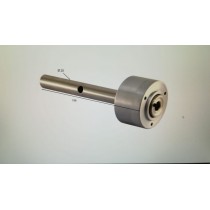 <p>The pulley hub is the assembly that receives motion from the belt and transmits it to the blade: it includes the pulley itself and the fixing hub, often complete with a connecting tie rod.</p> <p><strong>How to choose the right part</strong>: check the exact model of your slicer (e.g. Lusso, Lady, Dolly, Kelly for RGV; Mirra for Sirman) and the <strong>fitting</strong> — hexagonal or other — as well as the length for belt-driven versions. Many assemblies are also identified by an internal numeric code (e.g. 9918, 9919).</p> <p><strong>Compatibility by brand</strong>: available for FAC (mod. F300i/F330i), Sirman Mirra (220/300, belt-driven, hexagonal fitting) and the RGV range (Lusso, Lady, Dolly, Kelly, also in stainless steel and Red Special Edition versions).</p> <p>For other slicer parts go back to <a href="/en/slicer.html">Slicer Spare Parts</a>.</p> <p><strong>Frequently asked questions</strong></p> <p><strong>Does the pulley hub already include the tie rod?</strong><br>It depends on the specific product: some assemblies are sold complete with tie rod, others as pulley hub only — check the listing before ordering.</p> <p><strong>How do I check compatibility with my model?</strong><br>Compare the exact machine model, year (some assemblies are specific to versions from 2016/2007 onward) and fitting type with the original part.</p>
 -
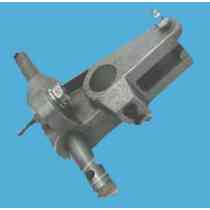 <p>The carriage assembly and blade carriage movement allow the blade plate (the plate the blade is mounted on) to move during adjustment or operation of the slicer.</p> <p><strong>Carriage assembly</strong>: the sliding component that guides the movement of the blade plate, available for different sizes and series (22/25/275 Lusso/Lady, V350/370 Kelly, 350, 250/275/300 Kelly, 300/V300/350 Dolly, 220/250 Dolly) — each version is specific to a model, not interchangeable between series.</p> <p><strong>Blade plate support</strong>: also available for more recent models (e.g. 300 Lusso RGV new version).</p> <p><strong>Compatibility</strong>: a blade carriage movement compatible with General Machine (mod. 250/300) is also available.</p> <p>For other slicer spare parts go back to <a href="/en/slicer.html">Slicer Spare Parts</a>.</p> <p><strong>Frequently asked questions</strong></p> <p><strong>How do I choose the right carriage assembly?</strong><br>Check the exact brand, series and size of your slicer: each version is sized for a specific model.</p> <p><strong>Do I need to replace the whole assembly or just the carriage?</strong><br>It depends on what's worn: if only the sliding part is faulty, check whether the carriage is available separately from the rest of the assembly.</p>
 -
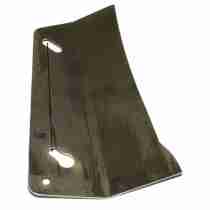 <p>The blade guard is the shield that covers the side of the slicer blade not in contact with the food — a safety component that reduces the risk of accidental contact during cutting.</p> <p><strong>Materials</strong>: <strong>stainless steel</strong> (most common, easy to clean), <strong>plexiglass</strong> (transparent, keeps the blade visible) or <strong>nylon</strong> on some older models.</p> <p><strong>How to choose the right spare part</strong>: every brand and model has its own dedicated blade guard, sized to the blade diameter and the spacing of the mounting holes — available for Sirman (Mirra 220/250/300, Mainz), Omas (VS220, mod. 250), Bizerba (M3 350V/G), RGV (Lusso/Lady 22/25) and Leo/Vandall (350).</p> <p>For the other blade guards see <a href="/en/finger-guards.html">Finger Guards</a> and <a href="/en/blade-protection-ring.html">Blade Protection Ring</a>.</p> <p><strong>Frequently asked questions</strong></p> <p><strong>Is the blade guard interchangeable between brands?</strong><br>No, every brand and model has its own blade guard with a specific hole spacing and diameter: it must be matched to the exact model of your slicer.</p> <p><strong>What happens if it's missing or damaged?</strong><br>The unprotected side of the blade stays exposed, increasing the risk of accidental contact during cutting or cleaning.</p>
 -
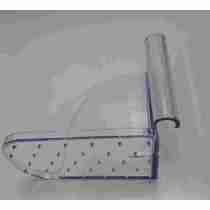 <p>Hand guards and finger guards reduce the risk of accidental contact with the blade during cutting, mounted on the food carriage plate or on the carriage itself.</p> <p><strong>Types</strong>: <strong>plexiglass hand guard</strong> (transparent, to keep the cut visible), <strong>carriage guard</strong> (metal, mounted on the side of the carriage) and <strong>plate finger guard</strong> (direct protection on the food-carriage plate).</p> <p><strong>How to choose the right part</strong>: check the exact machine model and, for plexiglass versions, the <strong>distance between the mounting holes</strong> (e.g. 87mm) — a specific measurement that must match the original.</p> <p><strong>Compatibility by brand</strong>: available for Sirman (mod. Giada, Smart, Mirra, Agata), FAC and Swedlinghaus (mod. 195/220/250), Noaw (mod. 300GE, TAS T4S 275/300E), Idea (220/250/300), Berkel (mod. BEG350/370), Kolossal (300-350iK) and Mistro (GS300-350).</p> <p>For other slicer spare parts go back to <a href="/en/slicer.html">Slicer Spare Parts</a>.</p> <p><strong>Frequently asked questions</strong></p> <p><strong>How do I measure the plexiglass hand guard I need to replace?</strong><br>Measure the distance between the mounting holes with a caliper: together with the exact machine model, it's the most reliable reference.</p> <p><strong>Does one brand's carriage guard fit another brand?</strong><br>Rarely: always check the exact brand and model, the mounting system often differs between manufacturers.</p>
 -
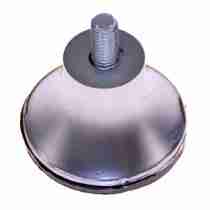 <p>Feet support the slicer on the work surface and absorb vibration during cutting: if worn or hardened, the machine may shift or vibrate abnormally.</p> <p><strong>Main types</strong>: <strong>suction cup</strong> feet (grip the surface for extra stability, available in diameters from 5 to 8mm), simple <strong>rubber</strong> feet, and <strong>threaded</strong> feet (screw directly into the machine body, with or without a hole).</p> <p><strong>How to choose the right part</strong>: check the foot's diameter, height and — for threaded versions — thread pitch and length. Berkel (e.g. mod. 834, 836, 115) and Omas (e.g. mod. H-L-C-GF-TN, A310-M250) models have specific feet not always interchangeable with other brands.</p> <p>For other slicer parts go back to <a href="/en/slicer.html">Slicer Spare Parts</a>.</p> <p><strong>Frequently asked questions</strong></p> <p><strong>Suction cup or plain rubber foot: which is better?</strong><br>The suction cup gives extra stability on smooth surfaces; plain rubber is the standard solution on many models — it depends on what your machine originally had fitted.</p> <p><strong>How do I measure the foot I'm replacing?</strong><br>Measure diameter and height with a caliper; if threaded, also check the thread pitch against the original foot.</p>
 -
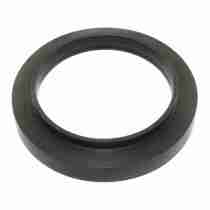 <p>The oil seal is the sealing ring fitted between the slicer's rotating and fixed parts (hub, motor shaft): it stops oil leaking out or water getting in during cleaning, protecting the bearings and transmission from premature wear.</p> <p><strong>How to choose the right replacement</strong>: three measurements matter — <strong>inner diameter</strong>, <strong>outer diameter</strong> and <strong>thickness</strong> (e.g. 40-50-7mm). Material is <strong>NBR</strong>, resistant to oils and washing water. The range also includes specific versions such as the water-seal ring gasket for the RGV 350 hub and the water seal for the Leonardo 350-385 model.</p> <p><strong>Sign of wear</strong>: oil seeping from the hub or water getting in during washing is the sign that the oil seal needs replacing.</p> <p>For the slicer's other spare parts, go back to <a href="/en/slicer.html">Slicer Spare Parts</a>.</p> <p><strong>Frequently asked questions</strong></p> <p><strong>How do I measure the oil seal to replace?</strong><br>Inner diameter, outer diameter and thickness of the original part: these are the three measurements needed to find the right replacement.</p> <p><strong>Why is my slicer leaking oil from the hub?</strong><br>The most common cause is a worn or hardened oil seal, which no longer holds the seal between the moving parts.</p>
 -
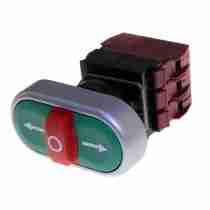 <p>The slicer button panels and switches listed here are part of the slicer spare parts range.</p> <p>For the complete guide to types (2/3 buttons, motor reversal, indicator light), how to choose the right part and brand compatibility, see the dedicated page <a href="/en/pulsantiere-per-affettatrici-e-tritacarni.html">Button Panels and Covers</a>.</p>
 -
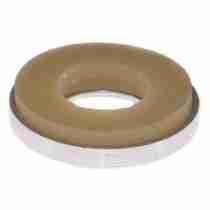 <p>Polyurethane washer for the slicer's worm screw (Atoma brand), a sliding and sealing component between moving parts.</p><p>For other slicer spare parts go back to <a href="/en/slicer.html">Slicer Spare Parts</a>.</p><p><strong>Frequently asked questions</strong></p><p><strong>When should the washer be replaced?</strong><br>When it's visibly worn or deformed, or no longer allows the worm screw to slide smoothly.</p>
 -
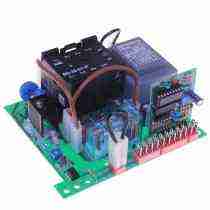 <p>The slicer electronic boards listed here are part of the slicer spare parts range: they manage start, stop and any motor thermal protection.</p> <p>For the complete guide to types (CEV, safety, universal), voltages and brand compatibility, see the dedicated page <a href="/en/electronic-boards-for-slicer.html">Electronic Boards for Slicers</a>.</p>
 -
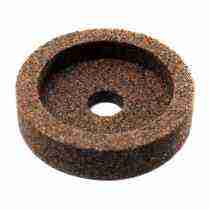 <p>The emery wheel is the abrasive stone mounted on the slicer's sharpener: running along both sides of the blade edge, it restores a sharp cutting edge after daily wear. Without an emery wheel in good condition, the sharpener still spins but no longer sharpens, and the blade keeps "crushing" the product instead of cutting it.</p> <p><strong>Grit</strong>: <strong>coarse</strong> for the first pass on a very worn blade or after an impact (removes more material and restores the edge), <strong>fine</strong> for finishing and polishing the cut. Always work the pair in sequence, coarse first, then fine.</p> <p><strong>How to choose the right replacement</strong>: what matters is the <strong>outer diameter</strong>, <strong>thickness</strong> and <strong>centre bore diameter</strong> — the measurements that determine whether the emery wheel fits on the sharpener's spindle. They're organised by diameter range: <a href="/en/diameter-40-44mm.html">40-44mm</a>, <a href="/en/diameter-45-49mm.html">45-49mm</a>, <a href="/en/diameter-50-65mm.html">50-65mm</a>. The catalogue also includes brand-specific models, such as Hobart, Safig and Tefren compatibles.</p> <p>For the slicer's other spare parts, go back to <a href="/en/slicer.html">Slicer Spare Parts</a>.</p> <p><strong>Frequently asked questions</strong></p> <p><strong>How do I know the emery wheel needs replacing?</strong><br>If after several passes the blade won't take an edge, or the surface of the stone looks smooth and glazed, it has lost its abrasive power.</p> <p><strong>Do I need to sharpen with both grits every time?</strong><br>No: for ordinary use the fine grit is often enough. The coarse grit is only needed after an impact or on a very neglected blade.</p>
 -
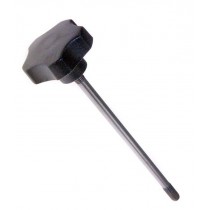 <p>The blade cover tie rod is the rod that connects and supports the blade guard on the slicer's blade, allowing it to move during cutting.</p> <p><strong>How to choose the right part</strong>: you need the pin's <strong>diameter</strong> and <strong>length</strong> (e.g. Ø7mm length 260mm, pin length 153mm) — measurements specific to each slicer model, not interchangeable between models with different lengths even at the same diameter.</p> <p><strong>Materials</strong>: available in standard steel or stainless steel, depending on the original model.</p> <p><strong>Compatibility by model</strong>: tie rods available for models 195, 220, 22/25, 275, 300, 300/E, 350, Kelly (gravity and vertical) and Silver — always check the exact pin length before ordering.</p> <p>For other slicer parts go back to <a href="/en/slicer.html">Slicer Spare Parts</a>.</p> <p><strong>Frequently asked questions</strong></p> <p><strong>How do I measure the tie rod I'm replacing?</strong><br>Measure the pin's diameter and length with a caliper or tape measure: these are the two figures needed for the correct part, specific to each model.</p> <p><strong>Steel or stainless steel: does it matter?</strong><br>Stainless steel resists corrosion and frequent washing better; the correct choice still depends on the material originally fitted on your slicer.</p>
 -
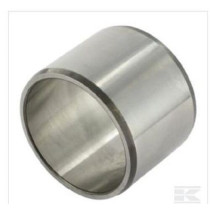 <p>Trolley bushings are low-friction sliding sleeves that guide the movement of the slicer's product-carrying trolley and other moving components.</p><p><strong>Glicodur/Glacer material</strong>: a self-lubricating composite material with high wear resistance, which reduces friction without needing frequent lubrication — used in applications requiring durability and constant smoothness.</p><p><strong>How to choose the correct spare part</strong>: each bushing is identified by three measurements — <strong>inner diameter x outer diameter x length</strong> (e.g. "22x25x25", "20x23x15") — all needed for correct replacement.</p><p><strong>Specific applications</strong>: a dedicated bushing is also available for the swan-neck arm and for the product press (model 22/25).</p><p>For other slicer spare parts go back to <a href="/en/slicer.html">Slicer Spare Parts</a>.</p><p><strong>Frequently asked questions</strong></p><p><strong>How do I measure the bushing to be replaced?</strong><br>Measure the inner diameter, outer diameter and length with a caliper: all three measurements must match the original.</p><p><strong>Why use Glicodur instead of a metal bushing?</strong><br>It is self-lubricating and reduces friction without frequent maintenance, ensuring constant smoothness over time.</p>
There are 6 products.
- -10%
neutral white oil pack for slicers 50 ml
Food-grade neutral white oil, 50 ml, for lubricating gravity-feed and flywheel slicers of any brand: colourless, odourless and tasteless, it protects the carriage, food pusher and blade from friction and rust. Do not use cooking oils.
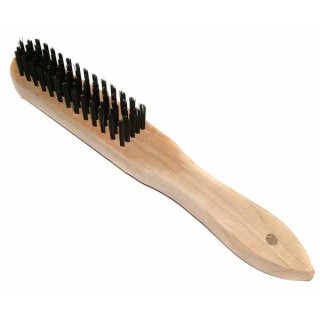
brush for cast iron plates
Brush with metal bristles for cleaning cast iron cooking plates, griddles and planchas. Removes baked-on cooking residue without damaging the surface.
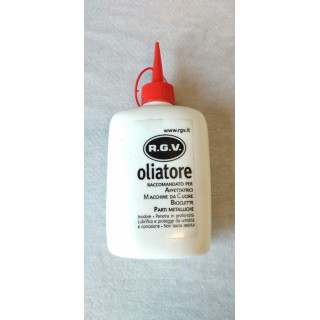
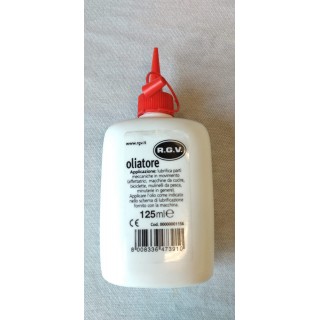
lubrificant for mechanical parts rgv
RGV lubricating oil in a 125 ml oil can for the mechanical parts of slicers. Suitable for food-service machines.
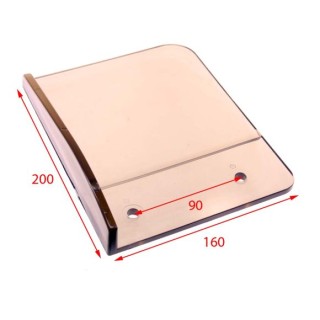
trolley protection gd370 g
Carriage protection for the GD370 slicer (also compatible with 2350/2370). Shields the carriage from knocks and processing residue while sliding along the guides. Code ABMAFF0085.

- -10%
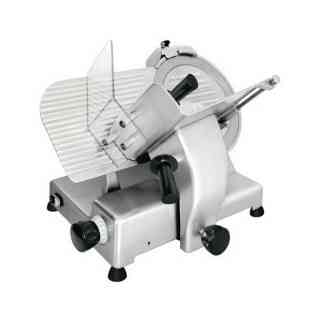
blade sharpening for slicer including two emery stones in rome service offered in 24h!
Ag work solution offers its customers in Rome an exclusive service to sharpen the blade of your slicer.
thanks to our extensive catalog of Smerigli we can find any solution.
exclusive for the area of ??Rome
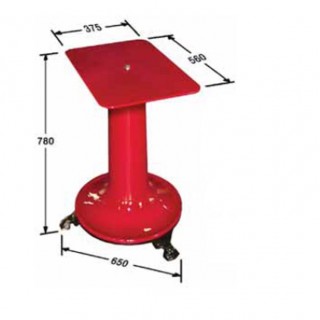
pedestal manual slicer
Support pedestal for manual flywheel slicer, dedicated accessory for the Style 900 model. For floor-standing use at working height.