
Bestsellers
- -10%
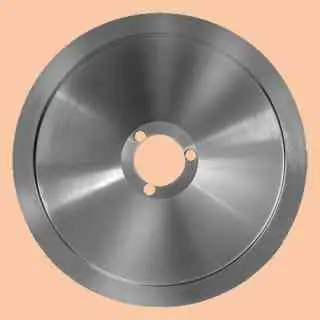
blade for slicer 250 diameter 25cm three hole central hole 40mm c45 rgv fac e
"
BLADE FOR SLICER 250 DIAMETER 25CM THREE HOLE CENTRAL HOLE 40MM C45 RGV FAC E
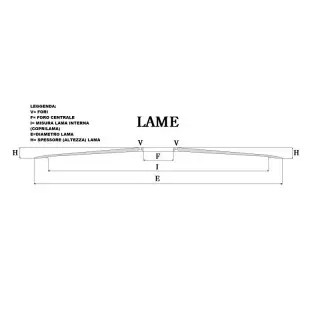
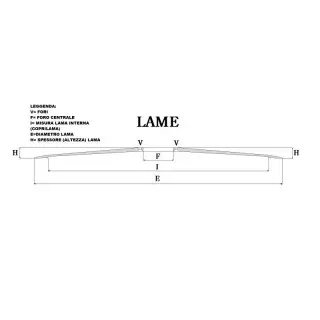
| (E) Diameter Blade | 250 | |
| (V) Number of holes | 3 | |
| (F) Dim. Central hole | 40 | |
| (H) Blade height (thickness) | 17.5 | |
| (I) Inner blade measurement (blade guard) | 210 |
VISIT THE BLOG FOR MORE INFORMATION
"
- -10%
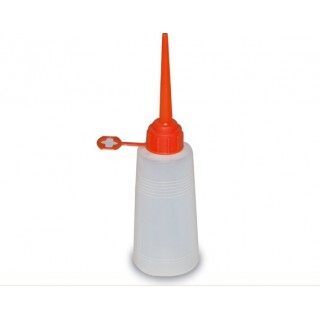
neutral white oil pack for slicers 50 ml
Food-grade neutral white oil, 50 ml, for lubricating gravity-feed and flywheel slicers of any brand: colourless, odourless and tasteless, it protects the carriage, food pusher and blade from friction and rust. Do not use cooking oils.
- -10%
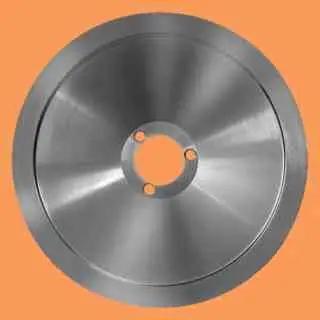
blade for slicer 220 diameter 22cm three hole central hole 40mm c45 rgv and other brands
BLADE FOR SLICER? 220/40/3/180 / 15,5 C45 FOR ABO - KOLOSSAL - OMAS -VAN DALL
(E) Diameter Blade 220
(V) Hole Number 3
(F) Dim. Central Hole 40
(H) Blade height (thickness) 15.5
(I) Internal blade size (cap) 180
VISIT THE BLOG FOR MORE INFORMATION
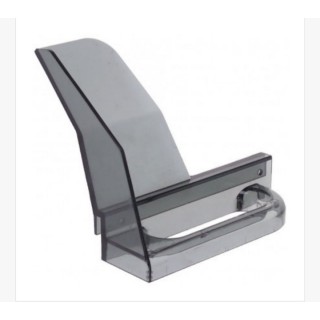
hand protection slicer fac and swedlinghaus model 195 220 250r 250e
Carriage hand guard for FAC and Swedlinghaus gravity-feed slicers, models 195 / 220 / 250R / 250E, CE and CE domestic versions. Safety shield between the hand and the blade during slicing: mandatory component, to be replaced if broken or missing. Hole centre distance 14.9 cm (measurement to check for compatibility). Specific to FAC/Swedlinghaus, not interchangeable with RGV models.

Subcategories
-
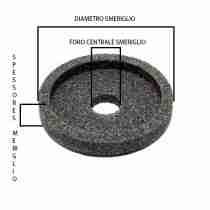 <p>The emery stone is the abrasive disc mounted on the slicer's sharpener, which trims and sharpens the blade's edge.</p> <p><strong>How to choose the right part</strong>: every emery stone is identified by three measurements — <strong>diameter x thickness x centre hole</strong> (for example 40x8x10, 43x10x8) — all three are needed, because even with the same diameter, thickness and hole can vary by sharpener model.</p> <p><strong>Grit</strong>: <strong>coarse</strong> for the main sharpening pass (removes more material), <strong>medium</strong> and <strong>fine</strong> for finishing the edge — many sharpeners fit two emery stones, one for coarse grinding and one for finishing.</p> <p><strong>Compatibility by brand</strong>: available for Abo, Abm, Arsa, Bizerba, Berkel and Kolossal.</p> <p>If your emery stone has a different diameter, see <a href="/en/diameter-45-49mm.html">Diameter 45-49mm</a> or <a href="/en/diameter-50-65mm.html">Diameter 50-65mm</a>; for the complete sharpener see <a href="/en/sharpener.html">Sharpeners</a>.</p> <p><strong>Frequently asked questions</strong></p> <p><strong>How do I measure the emery stone I'm replacing?</strong><br>Measure diameter, thickness and centre hole with a caliper: all three measurements must match the original.</p> <p><strong>What's the difference between coarse and fine grit?</strong><br>Coarse grit removes more material to restore the edge, fine/medium grit finishes the cut: many sharpeners use both in sequence.</p>
 -
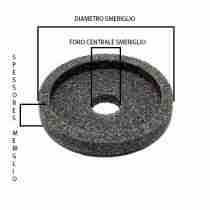 <p>The emery stone is the abrasive disc mounted on the slicer's sharpener, which trims and sharpens the blade's edge.</p> <p><strong>How to choose the right part</strong>: every emery stone is identified by three measurements — <strong>diameter x thickness x centre hole</strong> (for example 45x8x10, 48x10x13) — all three are needed, because even with the same diameter, thickness and hole can vary by sharpener model.</p> <p><strong>Grit</strong>: <strong>coarse</strong> for the main sharpening pass (removes more material), <strong>medium</strong> and <strong>fine</strong> for finishing the edge — many sharpeners fit two emery stones, one for coarse grinding and one for finishing.</p> <p><strong>Compatibility by brand</strong>: available for Fac, Fia Boston, Berkel, Kolossal, Noaw and General Machines.</p> <p>If your emery stone has a different diameter, see <a href="/en/diameter-50-65mm.html">Diameter 50-65mm</a> or <a href="/en/diameter-40-44mm.html">Diameter 40-44mm</a>; for the complete sharpener see <a href="/en/sharpener.html">Sharpeners</a>.</p> <p><strong>Frequently asked questions</strong></p> <p><strong>How do I measure the emery stone I'm replacing?</strong><br>Measure diameter, thickness and centre hole with a caliper: all three measurements must match the original.</p> <p><strong>What's the difference between coarse and fine grit?</strong><br>Coarse grit removes more material to restore the edge, fine/medium grit finishes the cut: many sharpeners use both in sequence.</p>
 -
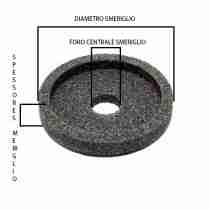 <p>The emery stone is the abrasive disc mounted on the slicer's sharpener, which trims and sharpens the blade's edge.</p> <p><strong>How to choose the right part</strong>: every emery stone is identified by three measurements — <strong>diameter x thickness x centre hole</strong> (for example 64x10x14.3) — all three are needed, because even with the same diameter, thickness and hole can vary by sharpener model.</p> <p><strong>Grit</strong>: <strong>coarse</strong> for the main sharpening pass (removes more material), <strong>medium</strong> and <strong>fine</strong> for finishing the edge, <strong>hard</strong> for specific uses — many sharpeners fit two emery stones, one for coarse grinding and one for finishing.</p> <p><strong>Compatibility by brand</strong>: available for Abo, Abm, Bizerba (including the cup-wheel version), Berkel, Fia Boston and Italiana Macchi.</p> <p>If your emery stone has a different diameter, see <a href="/en/diameter-45-49mm.html">Diameter 45-49mm</a> or <a href="/en/diametro-da-40-a-44-mm.html">Diameter 40-44mm</a>; for the complete sharpener see <a href="/en/sharpener.html">Sharpeners</a>.</p> <p><strong>Frequently asked questions</strong></p> <p><strong>How do I measure the emery stone I'm replacing?</strong><br>Measure diameter, thickness and centre hole with a caliper: all three measurements must match the original.</p> <p><strong>What's the difference between coarse and fine grit?</strong><br>Coarse grit removes more material to restore the edge, fine/medium grit finishes the cut: many sharpeners use both in sequence.</p>
There are 7 products.
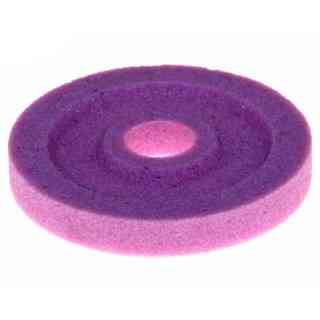
emery for tefren slicer 50x7x11
Grinding wheel for Tefren slicer sharpener and compatible models. Replacement abrasive stone that re-sharpens the edge of the circular blade and removes the burr.
- Diameter: 50 mm
- Thickness: 7 mm
- Bore: 11 mm
Replace when worn, glazed or chipped. Check the dimensions before purchasing.
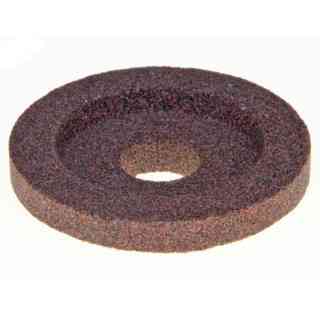
emery for safig slicer 51x11x13
Sharpening stone (grinding wheel) 51x11x13 mm for Safig slicers.
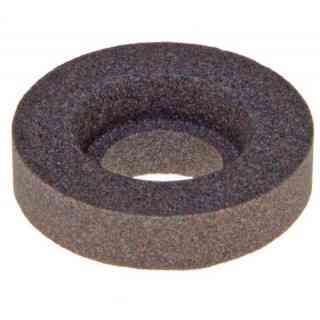
33x10x13 emery for fine grain slicer fc
33x10x13 mm fine FC grain emery wheel for the sharpener of slicers. 33 mm diameter, 10 mm thickness, 13 mm center hole; for finishing the blade edge.
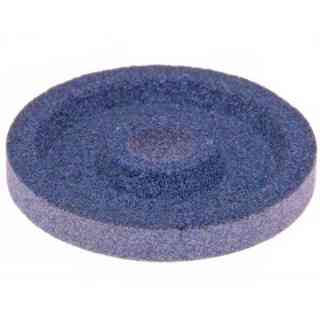
38x8x8 emery for hobart slicer and compatible coarse grain for sharpening
Coarse-grit sharpening stone, 38x8x8 mm, for Hobart slicer sharpeners and compatible models. First-stage blade sharpening.
- -10%
neutral white oil pack for slicers 50 ml
Food-grade neutral white oil, 50 ml, for lubricating gravity-feed and flywheel slicers of any brand: colourless, odourless and tasteless, it protects the carriage, food pusher and blade from friction and rust. Do not use cooking oils.

- -10%
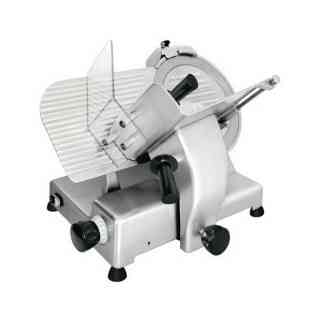
blade sharpening for slicer including two emery stones in rome service offered in 24h!
Ag work solution offers its customers in Rome an exclusive service to sharpen the blade of your slicer.
thanks to our extensive catalog of Smerigli we can find any solution.
exclusive for the area of ??Rome
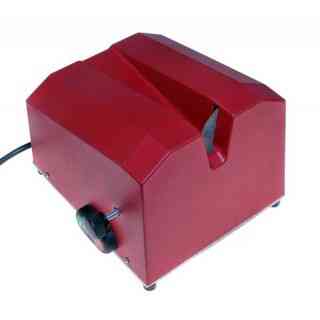
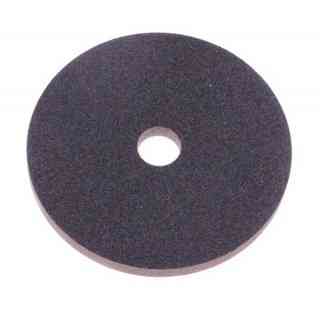
professional emery knife sharpener
RELIABLE PROFESSIONAL GRINDING-WHEEL KNIFE SHARPENER, POWERFUL MOTOR, EASY TO USE, ABLE TO SHARPEN ALL TYPES OF KNIVES WITH VERTICAL POSITIONING, ULTRA-FAST SHARPENING